Table of Contents
TogglePairing a fireplace and TV in the same living space isn’t just about convenience, it’s about creating a functional focal point that serves everyday life. Whether you’re planning a new build, a renovation, or just rethinking your living room layout, combining these two elements requires careful planning around heat, viewing angles, wiring, and aesthetics. This guide walks through practical fireplace and TV configurations, from mounting considerations and electric insert options to built-in surrounds and mantel styling that actually works.
Key Takeaways
- Fireplace and TV combinations create a functional focal point that maximizes seating sightlines and consolidates electrical and gas line work into a single project.
- Proper viewing height is critical—mount the TV center at 42–48 inches from the floor to eye level when seated, and use tilting mounts to compensate when positioning above a fireplace.
- Electric fireplaces are the ideal solution for TV walls since they produce minimal heat (4,000–5,000 BTUs), require only standard outlets, and eliminate clearance concerns that plague traditional gas or wood-burning units.
- Side-by-side layouts work better than above-mount configurations on long feature walls, solving heat damage risks while allowing for balanced visual design with built-in cabinetry or shelving.
- Custom surrounds using stone veneer, porcelain tile, or shiplap frame both elements as unified architectural features, with depth-built alcoves (4–6 inches) providing a flush, polished appearance.
- Mantel décor should remain minimal and layered with items under 6–8 inches tall, using negative space and asymmetrical styling to avoid competing with the TV screen visually.
Why Combine a Fireplace and TV in One Space?
Most living rooms have one obvious wall for furniture arrangement, usually the longest uninterrupted span. Placing both the fireplace and TV on that wall maximizes seating sightlines and eliminates the awkward split-focus layout where guests have to choose between the fire and the screen.
From a practical standpoint, running electrical, low-voltage wiring, and gas lines during a single project saves on labor and finish work. Framing a chase or building a media wall that houses both elements means you only disrupt drywall once. If you’re installing recessed outlets, conduit for cable management, or an outlet for a wall-mounted electric fireplace, consolidating the work makes sense.
There are thermal considerations. If you’re mounting a TV above a wood-burning or gas fireplace, you’ll need to account for heat rise, which can damage electronics and warp mounting hardware over time. Heat shields, proper mantel depth (at least 12 inches), and adequate clearance (typically 12–18 inches minimum from the top of the firebox) help, but many pros recommend against mounting a TV directly over a high-BTU gas unit or active wood burner. Electric fireplaces solve this problem, they produce minimal heat and are designed with media consoles in mind.
Modern Fireplace and TV Layout Ideas
TV Above Fireplace: Design Tips and Best Practices
Mounting the TV above the fireplace is the most common configuration, but it’s also the one that gets botched most often. The biggest issue? Viewing height. A TV center should sit at eye level when seated, typically 42 to 48 inches from the floor to the screen’s midpoint. When you add a fireplace and mantel below, the TV often ends up too high, forcing viewers to crane their necks.
To mitigate this, keep the mantel low and slim, or eliminate it entirely in favor of a flush-mount surround. If you’re using a wood or stone mantel, limit its projection to 6 inches or less to allow the TV to sit closer to the wall. Consider a tilting wall mount (such as a Sanus or Echogear model) that angles the screen downward, improving the viewing angle from seated positions.
Run conduit inside the wall during framing or use a surface-mount cord concealer if you’re retrofitting. Pull power, HDMI, coax, and any other cables through the chase. Install a recessed outlet box behind the TV location and another near the floor for components. If local code requires it (and many jurisdictions do for in-wall power relocation), have a licensed electrician handle the outlet installation to meet NEC Article 400 requirements.
Electric fireplaces designed for below-TV installation typically have top venting or are ventless, keeping heat away from the screen. Many come with a built-in media console or can be framed into a custom surround.
Side-by-Side Fireplace and TV Arrangements
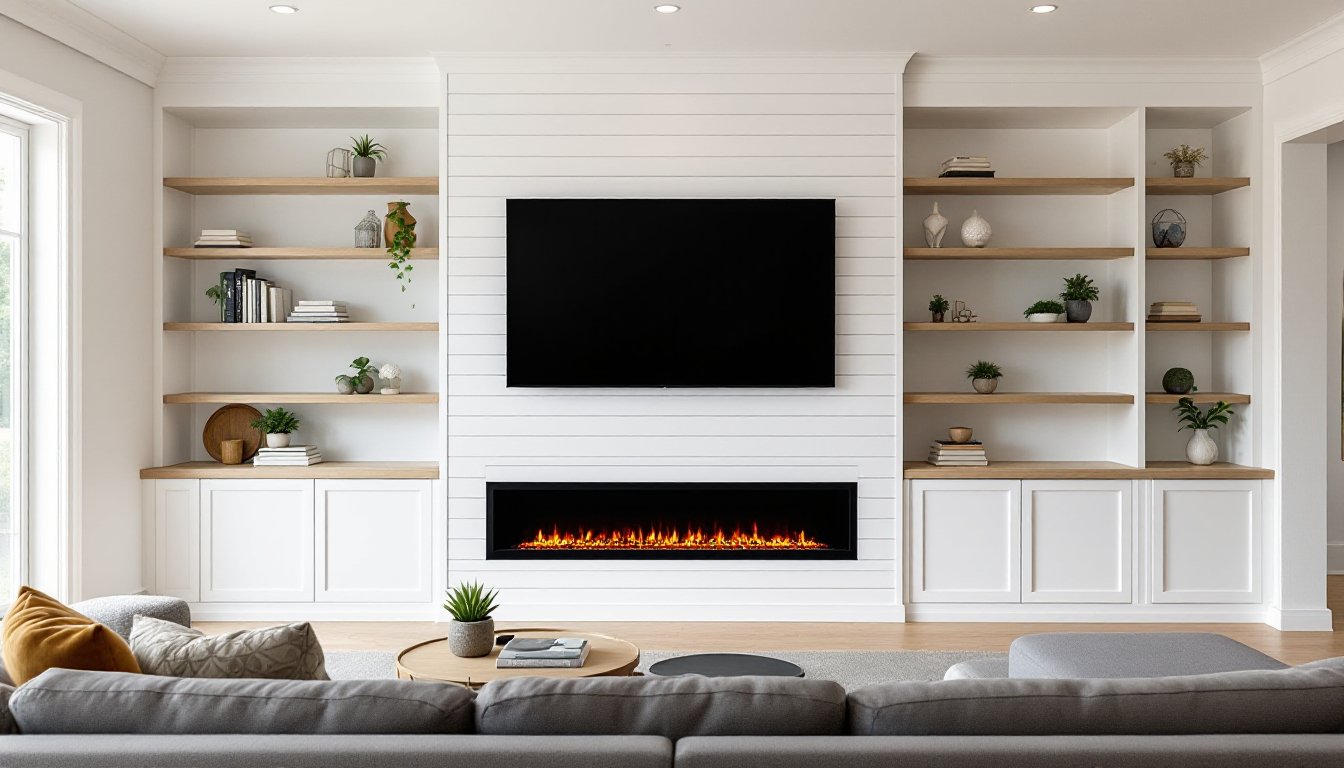
If mounting above isn’t feasible, due to ceiling height, existing masonry, or viewing angle concerns, a side-by-side layout is a smart alternative. This works especially well on a long feature wall, where the fireplace occupies one section and the TV another, with built-in cabinetry or open shelving linking them.
Frame both elements into a single media wall using 2×4 or 2×6 studs, depending on the depth you need for recessed components. Use fire-rated drywall (Type X, 5/8-inch) around the fireplace opening if required by local code. The TV section can be framed with standard 1/2-inch drywall.
Balance is key. If the fireplace is a linear electric insert, say, 50 inches wide, pair it with a TV in the 55-to-65-inch range to keep visual weight even. Separate the two with a vertical divider (stone, shiplap, or a different paint color) to define each zone without cutting the wall in half.
This layout also solves the heat problem entirely, since the TV is nowhere near the firebox. You can use a gas insert or wood-burning fireplace without worrying about damaging electronics.
Electric Fireplace Solutions for TV Walls
Electric fireplaces are the easiest retrofit option for a TV wall. They require only a 120V outlet (some larger units need 240V), produce controllable heat (usually 4,000–5,000 BTUs), and have zero clearance requirements to combustibles in most cases, check the manufacturer’s specs.
Linear wall-mount models (such as those from Dimplex, Touchstone, or Dynasty) range from 50 to 100 inches wide and recess into a 2×4 or 2×6 stud bay. You’ll need to frame an opening to the unit’s rough-in dimensions, run power, and finish with drywall, stone veneer, or tile. Most units include LED flame effects, adjustable brightness, and a remote control.
For a budget-friendly option, freestanding media console fireplaces combine a TV stand and electric insert in one piece of furniture. These typically support TVs up to 65 inches and require zero installation, just plug in and go. They work well in rentals or if you’re not ready to open walls.
If you’re building custom, consider a two-sided or see-through electric insert that can be viewed from both the living room and an adjacent dining area or hallway. Frame it into a partial wall or open-concept divider for a dramatic effect.
When incorporating electric fireplace designs into your media wall, keep in mind that most units have a built-in heater outlet along the top or front. Position the TV so the warm air doesn’t blow directly onto the screen.
Built-In and Custom Surround Designs
A custom surround frames both the fireplace and TV as a unified architectural feature. The most common approach is floor-to-ceiling built-ins flanking the fireplace, with the TV centered above or to one side.
Start with a stud-framed alcove for the TV. Depth depends on whether you’re surface-mounting or recessing the screen. For a flush look, frame the alcove 4–6 inches deep (enough for the TV, mount, and cables). Use blocking between studs at the mount height to secure heavy-duty lag bolts.
For the fireplace surround, materials matter. Natural stone veneer (such as stacked ledgestone or slate) adds texture but requires a moisture barrier and metal lath behind it. Cut pieces with a wet saw and use thinset mortar rated for stone. Porcelain tile in a large format (12×24 or larger) offers a cleaner, more contemporary look and installs faster. Shiplap, board-and-batten, or reclaimed wood work if you’re installing an electric fireplace, never use wood directly around a gas or wood-burning firebox unless it meets code-required clearances (typically 6 inches minimum).
Paint-grade MDF or poplar works well for built-in cabinetry. Use a face-frame construction with 3/4-inch plywood boxes, and finish with shaker-style doors or open shelving. Wire shelves for accent lighting using low-voltage LED strips or puck lights on a dimmer.
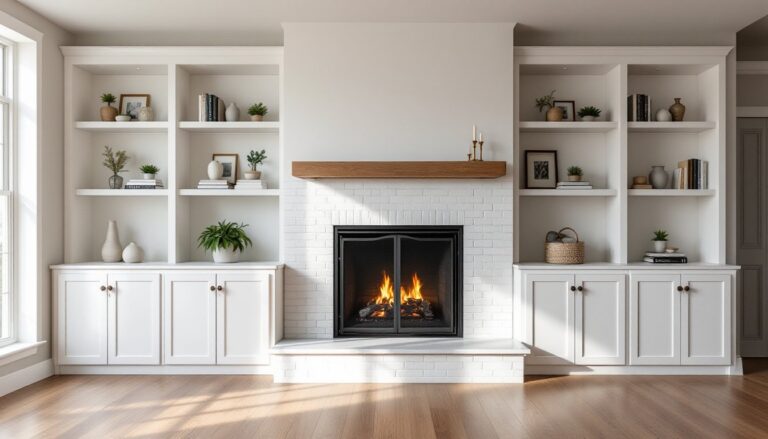
If you’re working with existing brick or stone, you can reface or veneer over it rather than demoing. Attach metal lath with masonry screws, apply a scratch coat, then install thin stone or tile. This saves demo costs and keeps the original structure intact.
Mantel Styling and Décor Around Your TV
A TV above the fireplace complicates traditional mantel styling, but it doesn’t eliminate it. The key is balancing the screen’s visual weight without cluttering the space.
Keep mantel décor low and layered. Avoid tall candlesticks or oversized vases that compete with the TV. Instead, use small greenery (eucalyptus stems, succulents), stacked books, or a single piece of art leaning against the wall. Limit height to 6–8 inches so nothing blocks the screen or looks awkward when the TV is on.
If the TV is large (65 inches or more), consider asymmetrical styling: a small plant or sculptural object on one side, negative space on the other. This keeps the focus on the screen while adding warmth to the surround.
Frame the TV with picture frame molding or a custom wood frame that makes the screen look intentional, not like an afterthought. When the TV is off, it reads as part of the architecture rather than a black rectangle. Some homeowners use motorized art covers or a Samsung Frame TV to disguise the screen entirely.
Integrate the TV into the overall design by painting the wall behind it a deep, matte color (charcoal, navy, forest green) to reduce glare and make the screen recede visually. Or clad the entire feature wall in wood slats, acoustic paneling, or 3D wall tiles that give the TV a deliberate backdrop.
For built-ins, add closed cabinetry below the fireplace for media components, gaming consoles, and remote storage. Include ventilation (a small hole or grommet in the back panel) to prevent heat buildup. Wire everything through the wall so no cables are visible.
Many designers reference creative mantel arrangements that balance décor and function without overwhelming the TV. Keep it simple, seasonal, and proportional to the space.