Table of Contents
ToggleCreating a bedroom that actually feels like your space, not a leftover college dorm or your parents’ guest room, doesn’t require an interior designer’s budget. Whether someone’s moving into their first apartment, refreshing a tired bedroom, or finally claiming a space that reflects their personality, the fundamentals are the same: intentional design choices, practical furniture, and a color palette that doesn’t scream “I grabbed whatever was on sale.” This guide walks through the core elements of designing a masculine bedroom that balances style with function, from wall treatments to lighting strategies.
Key Takeaways
- A well-designed guys bedroom starts with intentional choices: a clear focal point (like a statement headboard), layered textures, and clutter-free surfaces that feel functional rather than decorative.
- Choose neutral foundation colors like charcoal gray, navy, or warm taupe paired with one or two accent colors through textiles and art to create a sophisticated, mature space without overwhelming the room.
- Invest in durable furniture that earns its footprint—solid wood platform beds, wall-mounted nightstands, and multi-functional pieces like storage benches maximize both style and space efficiency.
- Layer your lighting with overhead fixtures, bedside task lamps, and accent lighting on dimmer switches to create flexibility for different activities and moods throughout the day.
- Maximize small bedrooms using vertical storage solutions like tall dressers, floating shelves, under-bed drawers, and closet optimization to keep the space organized without clutter.
Essential Elements of a Masculine Bedroom Design
A well-designed guys bedroom starts with a clear foundation: clean lines, purposeful furniture placement, and materials that feel substantial rather than decorative. The goal is creating a space that functions as more than just a place to sleep, it’s where someone unwinds, works, or entertains without the room feeling cluttered or chaotic.
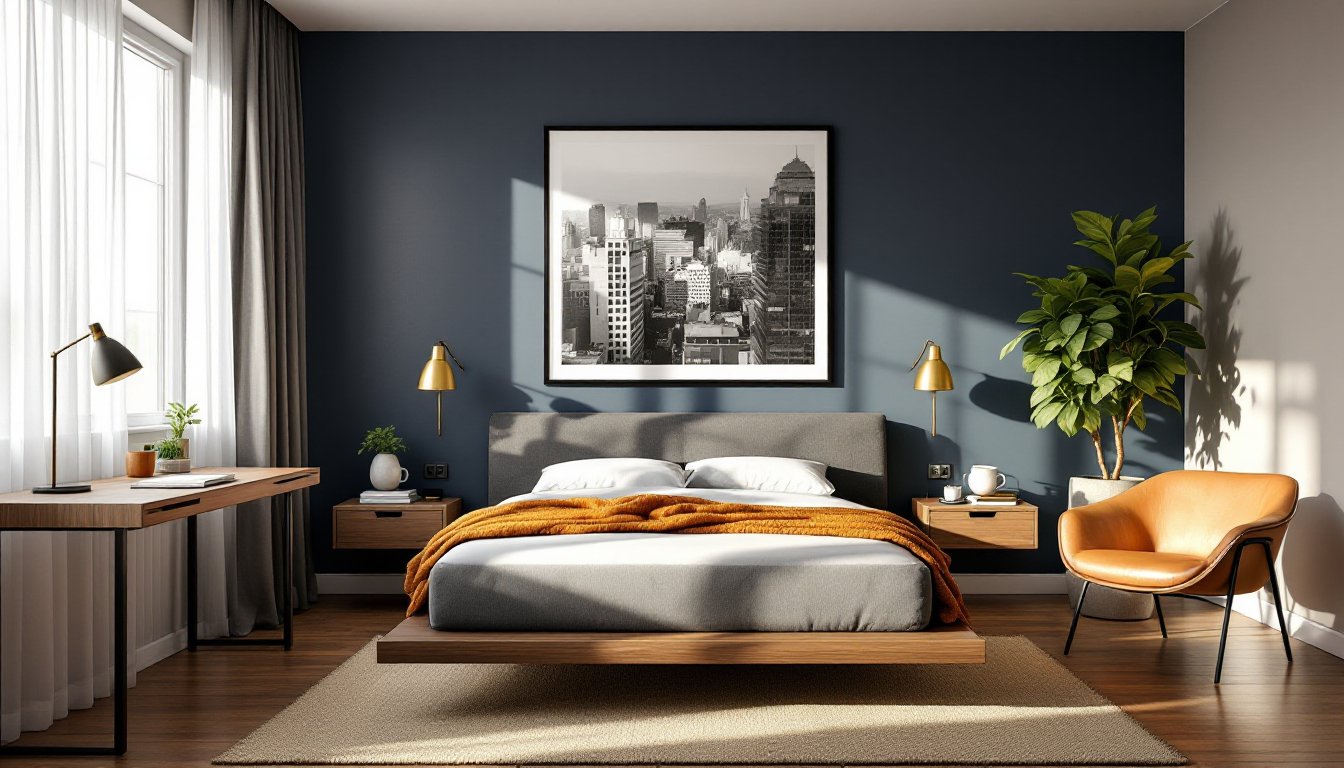
Start with a focal point. In most bedrooms, that’s the bed and the wall behind it. A solid wood headboard, a statement wall treatment (painted accent wall, reclaimed wood planks, or even exposed brick if the structure allows), or oversized art establishes visual weight. Skip the matchy-matchy bedroom sets: they often read juvenile or hotel-generic.
Layer textures intentionally. Masculine design doesn’t mean cold or stark. Mix materials like leather, metal, natural wood, and woven textiles. A leather bench at the foot of the bed, linen or cotton bedding in solid colors, and a wool or jute area rug ground the space without adding visual noise.
Keep surfaces clear. Nightstands and dressers should serve a function, not collect junk. If mail, charging cables, and random EDC items pile up, add a valet tray or small organizer. Surface clutter kills the vibe faster than bad paint.
Consider scale and proportion. Furniture should fit the room size. An oversized sectional works in a loft bedroom: in a 10×12 space, it overwhelms. Measure the room and map furniture placement before buying. Leave at least 24-30 inches of clearance around the bed for easy movement and making the bed without shoulder-checking the nightstand.
Color Palettes That Work for Men’s Bedrooms
Color sets the tone, literally. The right palette makes a small room feel larger or a cavernous space cozier. Stick to neutrals as the base, then layer in one or two accent colors through bedding, art, or a single painted wall.
Neutral foundations: Charcoal gray, warm taupe, navy, olive green, or even black work as wall colors when balanced with good lighting and lighter accents. Benjamin Moore’s Hale Navy or Sherwin-Williams Iron Ore are go-to paint choices that read sophisticated, not dorm-room dark. Use a satin or eggshell finish for walls: flat paint shows scuffs, and high-gloss feels too slick for a bedroom.
Accent options: Burnt orange, deep forest green, burgundy, or industrial metals (brass, matte black, brushed steel) add personality without veering into loud. These work best in textiles, throw pillows, blankets, or small furniture pieces like a side chair or lamp base.
White and light tones still work. Off-white, greige, or light gray walls create a modern backdrop, especially in smaller bedrooms or spaces with limited natural light. Pair them with darker furniture and textured fabrics to avoid a sterile look.
Avoid: Bright primary colors, overly trendy palettes (millennial pink had its moment), and busy patterns on walls. Paint coverage averages 350-400 square feet per gallon for quality interior paint: a standard bedroom typically needs one gallon for two coats.
Before committing, buy sample pots and paint 2×2-foot test squares on different walls. Colors shift dramatically depending on natural vs. artificial light and time of day.
Furniture Choices That Combine Style and Function
Furniture in a guys bedroom should earn its footprint. Every piece needs a clear purpose, decoration for decoration’s sake wastes space and money.
The bed frame: Skip flimsy metal frames. A solid wood platform bed (no box spring needed) or an upholstered frame in charcoal linen offers both durability and style. Platform beds typically sit 12-18 inches off the floor: add a low-profile mattress, and the bed height lands around 24 inches, making it easy to get in and out without climbing.
Nightstands: Match the height to the top of the mattress, give or take 2-3 inches. Floating wall-mounted shelves work in tight spaces and keep the floor clear. For traditional nightstands, look for at least one drawer or cabinet to hide charging cables and miscellaneous items.
Seating: If space allows, add a leather or upholstered accent chair in the corner. It’s functional for putting on shoes, tossing clothes (we all do it), or reading without lying in bed. A storage bench at the foot of the bed serves double duty.
Desk or workspace: Many people work from home at least part-time. A simple wall-mounted desk or a compact writing desk with clean lines fits into most layouts. Pair it with an ergonomic office chair, bedroom chairs don’t need to match bedroom furniture.
Dressers and storage: Vertical storage (tall dressers or armoires) saves floor space compared to wide, low dressers. If the bedroom has a closet, maximize that first with organizers before adding extra furniture. Creative budget-friendly furniture modifications can transform basic pieces into custom storage solutions that fit the space perfectly.
Materials: Solid wood, metal frames, and quality upholstery last. Particle board dressers sag and fail within a few years, especially if moved frequently.
Wall Decor and Art Ideas for a Guy’s Space
Blank walls read unfinished, but overdoing it feels chaotic. The key is intentional, curated pieces, not a random collection of posters.
Framed art and prints: Large-scale pieces (24×36 inches or bigger) make a statement without requiring multiple smaller frames. Black-and-white photography, abstract art, maps, or vintage travel posters work well. Skip the motivational quotes and generic canvas prints from big-box stores.
Gallery walls: If going this route, plan the layout on the floor first. Use matching frames (all black, all wood, or all metal) to create cohesion even with varied art styles. Hang the center of the gallery at 57-60 inches from the floor (standard gallery height).
Shelving as decor: Floating shelves display books, small plants, or collectibles without taking up floor space. Keep it minimal, three to five items per shelf, not a tchotchke graveyard.
Accent walls: Shiplap, board-and-batten, or a DIY wood slat wall add texture and visual interest. For DIY room transformations, accent walls are a manageable weekend project that delivers high impact. Use 1×4 or 1×6 lumber (actual dimensions: 3/4″ x 3.5″ or 3/4″ x 5.5″) for wood treatments. Paint or stain before installation to save time.
Mirrors: A large leaner mirror (floor-to-ceiling or close to it) visually expands the room and serves a functional purpose. Place it opposite a window to bounce natural light.
What to skip: Neon signs (unless it’s genuinely meaningful), tapestries, and anything that feels like dorm décor. If the item wouldn’t work in a living room, reconsider it for the bedroom.
Lighting Solutions to Set the Right Mood
A single overhead fixture isn’t enough. Layered lighting, ambient, task, and accent, creates flexibility for different activities and times of day.
Overhead lighting: Swap builder-grade fixtures for something with character: an industrial pendant, a modern flush-mount with Edison bulbs, or a ceiling fan with integrated lighting if the room runs warm. Dimmer switches are non-negotiable. Install a standard single-pole dimmer (compatible with LED bulbs) for about $15-25: it’s a 15-minute DIY swap if you’re comfortable with basic electrical work. Turn off the breaker first.
Bedside lighting: Table lamps or wall-mounted sconces on either side of the bed provide reading light without disturbing a partner. Aim for 40-60 watts equivalent in LED bulbs (actual wattage: 6-10W). Adjustable swing-arm lamps offer flexibility.
Task lighting: If there’s a desk, add a dedicated task lamp with focused, bright light. Look for 80+ CRI (Color Rendering Index) bulbs for accurate color when working.
Accent lighting: LED strip lights behind the headboard, under floating shelves, or along baseboards add subtle ambient glow. Choose warm white (2700-3000K color temperature) over cool daylight tones for bedrooms.
Smart bulbs: Philips Hue, LIFX, or budget alternatives like Wyze bulbs let someone control brightness and color temperature from a phone or voice assistant. It’s useful for winding down before bed (shift to warmer tones) or waking up gradually.
Natural light control: Blackout curtains or cellular shades block early-morning sun. Layer them with sheer panels for daytime privacy without losing all natural light.
Storage and Organization Hacks for Small Bedrooms
Small bedrooms demand creativity. Every square foot counts, and vertical space is underutilized in most layouts.
Under-bed storage: Platform beds with built-in drawers or storage bins that slide underneath maximize dead space. Measure the clearance first, most beds offer 6-12 inches of space. Low-profile bins on wheels work best.
Closet optimization: Double hanging rods (one high, one low) instantly double hanging space for shirts and pants. Add shelf dividers for stacks of sweaters or jeans. Over-the-door organizers hold shoes, accessories, or gym gear.
Wall-mounted solutions: Pegboards, hook rails, or floating shelves keep items off the floor and nightstand. Mount a pegboard above a desk for cables, headphones, keys, or a watch.
Multi-functional furniture: Ottomans with hidden storage, beds with built-in shelving in the headboard, or a storage bench at the foot of the bed serve dual purposes. For small-space room makeovers, multi-functional pieces are essential for maximizing every inch.
Drawer organizers: Cheap drawer dividers from the container store or DIY versions cut from scrap plywood keep socks, belts, and accessories sorted. Most dresser drawers are 12-18 inches deep: size organizers accordingly.
Cable management: Velcro cable ties, adhesive cable clips, or a simple charging station corral phone chargers, laptop cables, and headphones. Nothing kills a clean aesthetic faster than tangled cables.
Purge regularly: Storage solutions don’t fix clutter, they organize what’s worth keeping. Donate or toss clothes that don’t fit, broken items, or anything unused in the past year.
Conclusion
Designing a guys bedroom that balances style and practicality doesn’t require a decorator or unlimited budget. It requires intentional choices: a cohesive color palette, furniture that fits the space and serves a purpose, layered lighting, and smart storage. Start with one or two foundational changes, paint, a new bed frame, better lighting, and build from there. The result is a space that actually feels like home, not a placeholder.