Table of Contents
ToggleThe fireplace remains a natural focal point in any room, whether it’s a working wood-burner, gas insert, or an electric unit. Modern fireplace decor strips away the cluttered mantel of the past, favoring clean lines, thoughtful materials, and intentional placement of every piece. The goal isn’t to make the fireplace disappear: it’s to elevate it as a design anchor without overwhelming the space. In 2026, the trend leans toward mixing textures, concrete with wood, metal with organic shapes, and letting negative space do some of the heavy lifting. Whether working with a new build or updating a builder-grade surround, the right decor choices turn a functional feature into a statement without requiring a full remodel.
Key Takeaways
- Modern fireplace decor emphasizes clean lines, minimal clutter, and negative space, with mantels styled using three to five objects in varying heights and materials rather than symmetrical arrangements.
- Fireplace decor art or mirrors should be roughly two-thirds the width of the fireplace and mounted 4–6 inches above the mantel to create visual separation without overwhelming the space.
- Contemporary surrounds blend concrete, stone, large-format tile, and metal materials—all rated for high-heat applications and installed per local building codes and manufacturer specifications.
- Asymmetrical floating shelves at staggered heights break up mantel symmetry and provide display space while maintaining the minimalist aesthetic that defines modern fireplace design.
- Strategic lighting, including picture lights and LED candles in warm white tones (2700–3000K), transforms the fireplace into an evening focal point and enhances texture visibility.
- All flammable materials must stay at least 12 inches from active fireplace openings, and mounting hardware should be tested and rated for frame weight to ensure safety and stability.
Minimalist Mantel Styling for Contemporary Homes
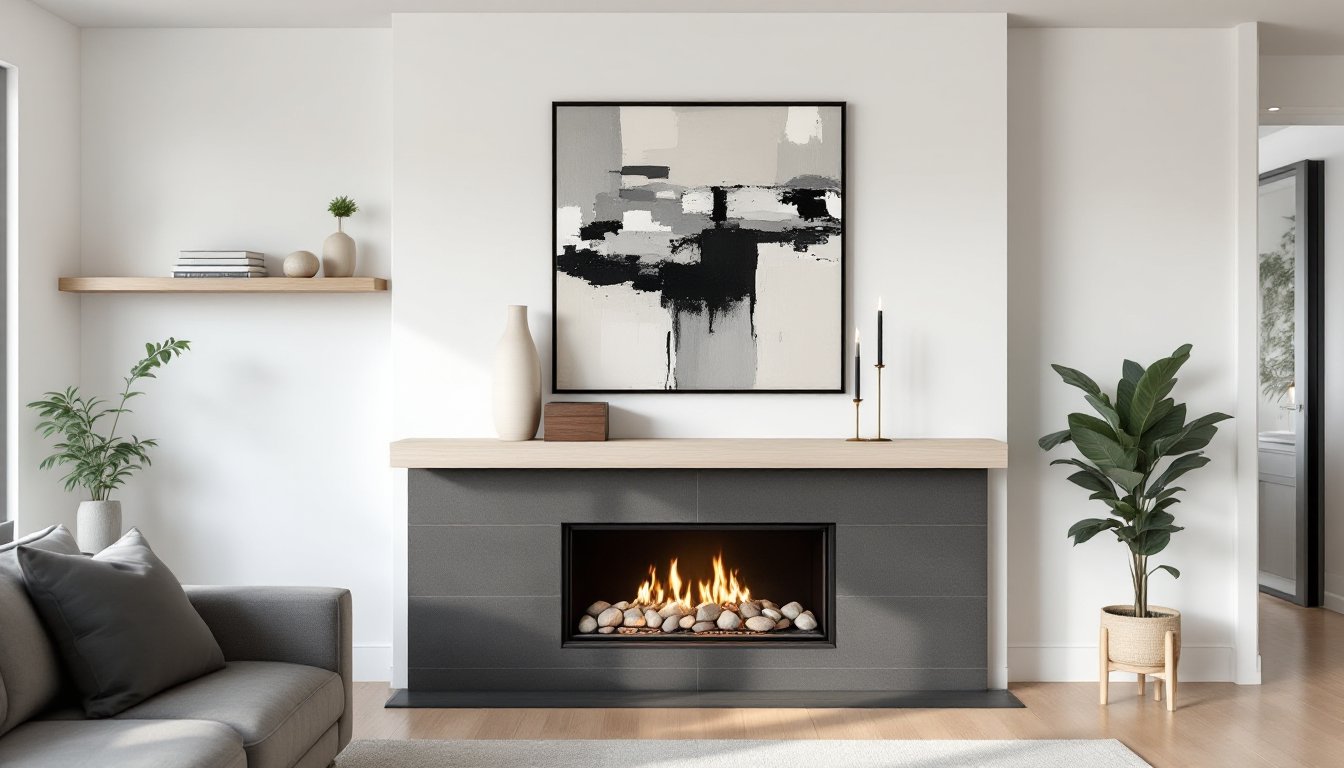
A minimalist mantel doesn’t mean bare, it means every item earns its spot. Start by choosing one large-scale piece as the anchor: a wide ceramic vase, a sculptural object, or a framed piece of art leaning casually against the wall. This prevents the “tchotchke shelf” look and gives the eye a clear resting point.
Limit the mantel to three to five objects total. Odd numbers create visual tension that feels more dynamic than symmetrical pairs. Vary the heights, if the anchor piece is tall, add something low and wide to one side. Mix materials: matte pottery next to a brass candlestick, or a raw wood box beside a smooth stone orb.
Negative space is critical. Leave at least 30-40% of the mantel surface empty. On a standard 60-inch mantel, that’s roughly two feet of open space distributed across the shelf. This breathing room prevents the arrangement from reading as cluttered, especially when viewed from across the room.
Avoid seasonal rotations that require constant swapping. Choose neutral, year-round pieces in blacks, whites, taupes, and natural woods. If color is part of the palette, tie it to other elements in the room, a terracotta vase that echoes throw pillows, or a navy object that picks up the rug.
Consider the mantel depth. Shallow mantels (4 to 6 inches) can’t support deep objects without risk. If the mantel is deeper than 8 inches, layer objects front to back for dimension, just ensure nothing blocks the fireplace opening or interferes with heat venting on active units.
Statement Art and Mirrors Above the Fireplace
Hanging art or a mirror above the fireplace requires thinking about scale and placement. The piece should be roughly two-thirds the width of the fireplace opening or mantel, whichever is wider. A 48-inch mantel calls for art around 30-36 inches wide. Go smaller and it floats awkwardly: go oversized and it can work if intentional, but risks overwhelming the wall.
Mount the bottom edge of the frame 4 to 6 inches above the mantel. This creates visual separation without a gap so large the two elements feel unrelated. If there’s no mantel, center the art at 60 inches from the floor to the center of the piece, the standard gallery height. Adjust down slightly if the ceiling is low or the fireplace is especially tall.
Mirrors amplify light and make a room feel larger, especially useful in spaces with limited windows. A large frameless mirror with a thin metal edge fits modern aesthetics. Round mirrors soften the sharp lines of a rectangular fireplace, while an oversized rectangular mirror echoes the fireplace geometry. Just avoid placing mirrors directly above active wood-burning fireplaces, heat and smoke can damage silvering over time. Gas and electric units are fine.
For art, consider oversized abstract pieces in neutral tones or bold black-and-white photography. Avoid anything too busy, fireplaces already command attention. If the fireplace surround is visually complex (patterned tile, natural stone with heavy veining), keep the art simple. If the surround is plain drywall or smooth painted brick, the art can carry more detail.
Mounting hardware matters. Use wall anchors rated for the frame weight if not hitting studs. For heavy mirrors (over 30 pounds), use D-rings with wall anchors or a French cleat system. On brick or stone, use masonry anchors and pre-drill with a carbide bit. Test the mount, give it a firm tug before stepping back.
Modern Fireplace Surround Materials and Finishes
Concrete and Stone Accents
Poured concrete surrounds deliver an industrial-modern look that pairs well with mid-century and Scandinavian interiors. Concrete board (like Hardibacker or Durock) can be skim-coated with a concrete overlay product for a similar effect at lower cost and weight. Expect to apply two coats for even coverage, sanding lightly between. Seal with a penetrating sealer to prevent staining, concrete is porous and will absorb oils and liquids.
Natural stone brings texture and organic variation. Stacked ledgestone (usually 4 to 8 inches per piece) creates a three-dimensional surface without requiring advanced masonry skills. Panels are available that mimic the look with interlocking faux stone, backed with foam for easier wall mounting. For a sleeker take, large-format stone slabs in honed marble, soapstone, or granite read modern without the rustic cabin vibe. Slabs typically run 24 x 36 inches or larger and require professional fabrication and installation due to weight and cutting precision.
Stone surrounds on wood-burning fireplaces must meet local code for combustible clearances, typically 6 inches minimum from the firebox opening to any combustible material. Stone itself is non-combustible, but the framing behind it isn’t. Consult the International Residential Code (IRC) or a local building inspector before starting.
Sleek Tile and Metal Options
Large-format porcelain tile in matte black, charcoal, or white creates a clean, monolithic look. Tiles sized 12 x 24 inches or 24 x 24 inches minimize grout lines. For a bolder statement, narrow subway tile laid vertically or in a herringbone pattern adds movement. Use unsanded grout for tiles with tight joints (less than 1/8 inch) and seal grout annually to resist soot and ash staining.
Metal surrounds, blackened steel, brushed stainless, or powder-coated aluminum, suit contemporary and loft-style spaces. Fabricated metal panels are custom work, typically requiring a metal shop to cut, weld, and finish. A more accessible option: metal tile in 4 x 12-inch or hexagon formats, available in copper, brass, and stainless finishes. These install like ceramic tile over cement board.
Heat resistance is non-negotiable. Ensure all materials are rated for high-heat applications. Most porcelain and natural stone are fine: some glass tiles are not. Check manufacturer specs. If installing tile over drywall near a gas or electric insert, use cement backer board as the substrate. For wood-burning units, verify clearances and consider a heat shield if the surround is close to the firebox.
Updating a surround is often a cosmetic project that doesn’t require a permit, but altering the firebox, flue, or venting does. When in doubt, call the local building department.
Floating Shelves and Asymmetrical Arrangements
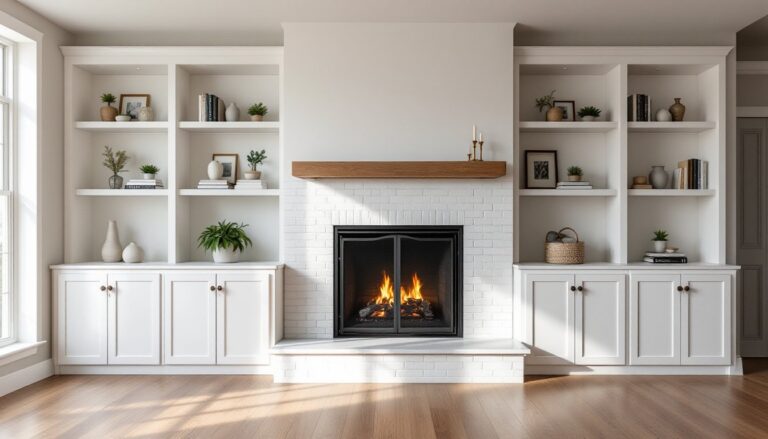
Floating shelves flanking a fireplace break up the symmetry of a centered mantel and create display space without adding bulk. 12-inch-deep shelves are standard and can hold books, plants, or small decor objects. Install them at staggered heights, one shelf at 48 inches, the other at 60 inches, for a more dynamic, less matchy look.
Mounting to studs is ideal, especially for shelves holding any weight. A single 16-inch stud bay limits placement, so plan shelf length accordingly or use a stud finder to map the wall first. If studs don’t align, use heavy-duty toggle anchors rated for at least 50 pounds per anchor on drywall. On brick or stone, use masonry anchors and a rotary hammer drill with a carbide bit.
Asymmetrical arrangements work well when the fireplace isn’t centered on the wall, common in open-concept spaces or rooms with off-center windows. Place a single floor-to-ceiling shelf unit on one side of the fireplace, balanced by a low credenza or a large potted plant on the other. The key is balancing visual weight, not mirroring placement. A tall, narrow object on one side can offset a wide, low piece on the other.
For those interested in broader updates to adjacent rooms, exploring strategies like kitchen renovation ideas can tie together cohesive design themes across open living spaces.
Shelf styling follows the same minimalist principles as mantels: group objects in odd numbers, vary height and texture, and leave empty space. A stack of three hardcover books, a small succulent, and a ceramic bowl is plenty for a 24-inch shelf. Overloading shelves makes them look cluttered and draws focus away from the fireplace itself.
Lighting and Ambiance Enhancements
Lighting turns a fireplace from a daytime architectural feature into an evening focal point, even when the fire isn’t burning. Picture lights mounted above the mantel or art illuminate the display and add a gallery feel. Choose battery-operated LED picture lights (typically 12 to 18 inches long) for cord-free installation, or hardwire them if wall access allows. Warm white bulbs (2700-3000K) mimic firelight better than cool daylight tones.
Recessed canister lights in the ceiling, aimed at the fireplace, create a wash of light that highlights texture in stone or tile. Use adjustable trims to direct the beam where needed. If the ceiling is already finished, surface-mount or track lighting offers similar effect without cutting into drywall.
For a softer glow, add flameless LED candles in varying heights on the mantel or hearth. High-quality versions with timers and realistic flicker are worth the extra cost, cheap ones look obviously fake. Real candles work too, but keep them away from active fireplaces and never leave them unattended. Soot and ash from wood fires will coat candle holders quickly, requiring frequent cleaning.
String lights or small LED strips tucked inside the firebox of a non-working fireplace create subtle ambient light. This works particularly well in converted fireplaces that no longer vent. Use warm white LEDs and hide the cord along the back edge of the hearth.
Consider adding a dimmer switch to overhead or recessed lights near the fireplace. Dimming the room lights while the fire burns keeps the flames as the primary light source and enhances the cozy factor.
For those drawn to modern interior aesthetics, resources like Dwell offer insights into integrating lighting with architectural features. Similarly, Design Milk frequently highlights innovative fixtures that complement contemporary fireplaces. Exploring Decoist can provide additional inspiration for layering light with decor elements.
Safety note: Keep all flammable decor, including faux greenery, fabric, and paper, at least 12 inches away from active fireplace openings. Even gas and electric units generate heat that can scorch or ignite nearby materials. Always follow manufacturer clearance recommendations for the specific unit.