Table of Contents
ToggleGlam bedroom design isn’t about filling a room with random sparkly objects. It’s a deliberate approach that balances luxury materials, thoughtful metallics, and rich textures to create a space that feels like a high-end hotel suite. Whether you’re working with a master bedroom or a compact guest room, the principles remain the same: quality over quantity, intentional statement pieces, and a commitment to finishing details. The good news? You don’t need a contractor or a five-figure budget to pull it off, just a solid plan and willingness to get your hands dirty.
Key Takeaways
- Glam bedroom ideas succeed through intentional design balancing luxury materials, metallics, and rich textures rather than random sparkly objects—prioritize quality over quantity to create a high-end hotel-like retreat.
- Layer multiple lighting sources including statement fixtures, task lighting, and accent lights with warm white bulbs and dimmer switches to create inviting ambiance and showcase metallic finishes.
- Choose one or two coordinating metal finishes consistently throughout the room, focusing metallics strategically at eye level on hardware, lamps, and frames rather than overwhelming the entire space.
- Invest in plush, textured fabrics like velvet headboards, high-thread-count sheets, silk drapery, and faux fur throws—these materials are what truly separate a glam bedroom from generic designs.
- Build your color palette around three main colors plus metallics using rich jewel tones or soft neutrals paired with high-contrast accents, and test samples at different times of day before committing.
- Transform your space affordably with DIY projects like tufted headboards, mirrored nightstands, and gilded mirror frames that deliver high visual impact without requiring contractor expertise.
What Defines the Glam Bedroom Style?
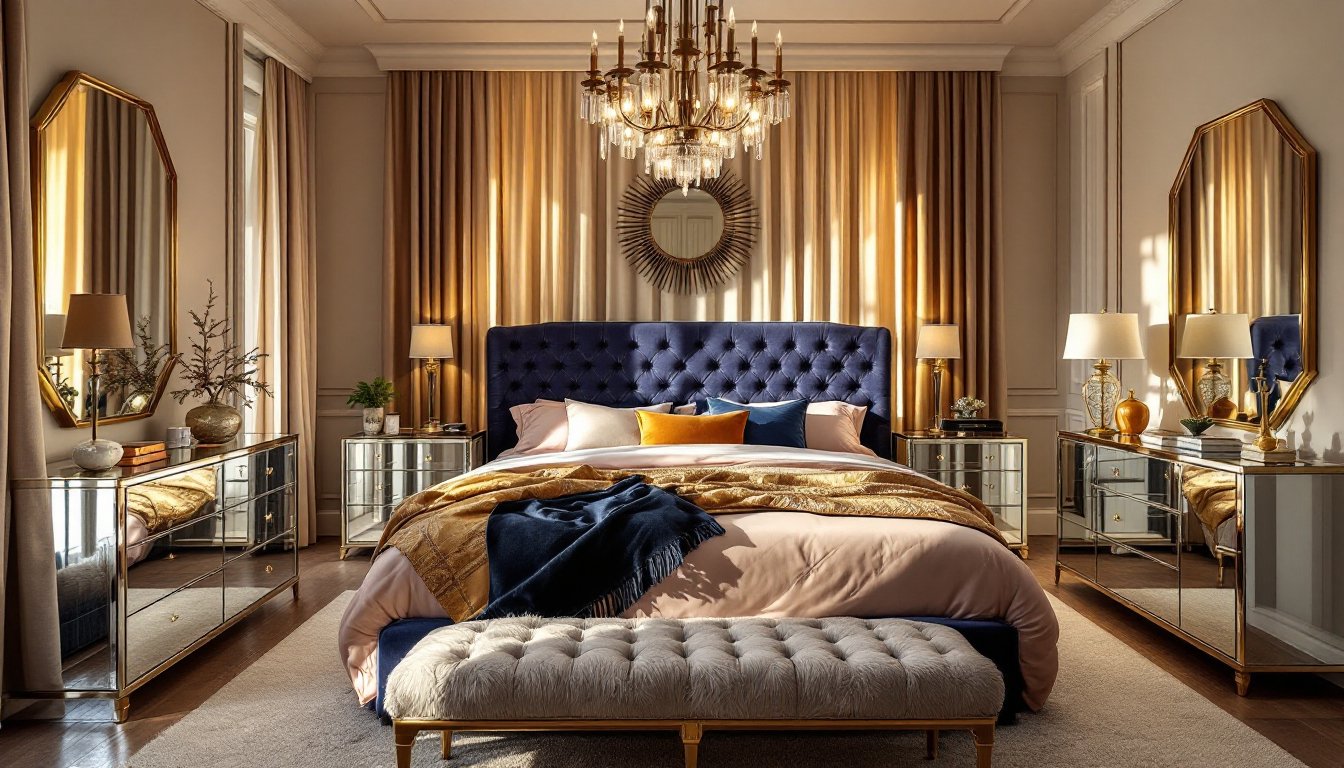
Glam style sits at the intersection of Hollywood Regency, Art Deco, and modern luxury. Think mirrored surfaces, tufted upholstery, metallic finishes, and dramatic lighting, all executed with restraint.
The foundation of a glam bedroom is symmetry and balance. Matching nightstands flanking a centered bed, paired table lamps, and coordinated window treatments create visual order. This isn’t accidental: it’s the same design principle used in luxury hotels and high-end bedroom designs across the country.
Key characteristics include:
- Reflective surfaces: Mirrors, lacquered furniture, glass, or polished metal that bounce light around the room
- Layered lighting: Overhead fixtures, accent lighting, and task lighting working together
- Plush textiles: Velvet, silk, faux fur, and high-thread-count linens
- Metallic accents: Gold, brass, chrome, or nickel in light fixtures, hardware, and decor
- Statement furniture: An upholstered headboard, a glamorous vanity, or an accent chair with presence
Unlike minimalist styles, glam embraces ornamentation, but it’s curated, not cluttered. Every piece should serve a purpose or make a deliberate visual statement.
Luxurious Fabrics and Textures That Elevate Your Bedroom
Fabric choice separates a generic bedroom from a glam retreat. The goal is tactile richness, materials that invite touch and add visual weight.
Velvet is the workhorse of glam design. An upholstered headboard in channel-tufted velvet immediately upgrades a space. Opt for performance velvet if you have pets or kids: it resists stains and crushing better than traditional cotton velvet. Standard headboard panels for a queen bed measure 60″ wide: add 2-3″ padding thickness plus fabric and backing.
For bedding, layer textures instead of matching everything. Start with high-thread-count cotton sheets (400-600 thread count offers the best balance of softness and durability), add a duvet in sateen or silk, then top with a faux fur throw or velvet quilt. Real silk requires dry cleaning: washable silk blends offer a similar sheen with easier care.
Window treatments matter more than most DIYers realize. Floor-length drapery in heavy silk or linen blend adds instant luxury. Hang rods 4-6 inches above the window frame and extend them 8-12 inches beyond each side to make windows appear larger. Use drapery clips or ring systems for easier removal during cleaning.
Consider these fabric applications:
- Upholstered bench at the foot of the bed (adds seating and visual anchor)
- Tufted ottoman or pouffe (functional and decorative)
- Accent pillows in mixed textures: velvet, silk, metallic brocade (stick to 4-6 pillows max to avoid clutter)
- Area rug in plush pile or faux sheepskin for underfoot luxury
Avoid mixing too many patterns. If you include one patterned textile (damask pillows, geometric rug), keep the rest solid or subtly textured.
Statement Lighting Fixtures for Maximum Impact
Lighting does heavy lifting in glam bedrooms, it’s both functional and theatrical. A chandelier or oversized pendant serves as the room’s jewelry.
For standard 8-foot ceilings, choose fixtures 20-24 inches in diameter for a queen or king bedroom. The bottom of the chandelier should hang 7 feet minimum above the floor to meet code and avoid head strikes. If you’re replacing a basic ceiling box, verify it’s rated for the fixture weight (most standard boxes support up to 50 pounds: heavier fixtures require a fan-rated or reinforced box).
Installation requires shutting off power at the breaker. Use a non-contact voltage tester to confirm wires are dead before touching anything. If you’re uncomfortable working with electrical, hire a licensed electrician, this isn’t the project to wing.
Beyond the centerpiece fixture, add layered lighting:
- Table lamps on nightstands with crystal or metallic bases (use 3-way bulbs for adjustable brightness)
- Sconces flanking the bed or vanity (hardwired sconces require cutting into drywall and running wire: plug-in versions offer easier installation)
- LED strip lighting behind the headboard or under floating nightstands for ambient glow
- Dimmer switches on all overhead lighting (standard rotary dimmers cost $15-25 and install in 20 minutes)
Choose warm white bulbs (2700-3000K color temperature) to enhance metallics and create inviting ambiance. Cool white bulbs (4000K+) feel clinical and flatten glam materials.
Mirrors positioned opposite windows or lamps multiply light naturally. A large leaner mirror (65-70 inches tall) propped against a wall requires no hanging hardware and reflects both natural and artificial light throughout the space.
Metallic Accents and Finishes That Add Sparkle
Metallics catch and reflect light, creating that signature glam sparkle. The trick is choosing one or two metal finishes and using them consistently throughout the room.
Brass and gold read warm and traditional. Chrome and nickel skew modern and cool-toned. Aged brass or oil-rubbed bronze offer a softer, less shiny alternative. Mixing metals can work, brass drawer pulls with a chrome lamp base, but limit yourself to two finishes max.
Practical applications for metallics:
- Hardware upgrades: Swap basic drawer pulls and cabinet knobs for metallic versions ($3-8 per pull: measure center-to-center screw spacing before buying)
- Mirror frames: Gold or silver leaf frames around mirrors add instant glam (DIY gold leafing kits cost $20-40 and include adhesive size and leaf sheets)
- Curtain rods and finials: Oversized finials in brass or crystal dress up window treatments
- Furniture legs: Replace wooden furniture legs with tapered brass or acrylic legs (most attach with hanger bolts and require drilling a pilot hole)
- Decorative trays: Mirrored or metallic trays corral nightstand items while adding shine
Metallic paint offers an affordable way to add shimmer. Use it on an accent wall, furniture piece, or ceiling. Apply metallic paint over a coordinating base coat for best results (coverage runs about 350-400 square feet per gallon). Use a high-quality synthetic brush or foam roller to avoid streaking.
Be strategic with placement. Luxurious bedroom designs often concentrate metallics at eye level, lamps, hardware, frames, rather than overwhelming a space with gold everything.
For a DIY metallic headboard, apply peel-and-stick metallic wallpaper to a piece of 3/4-inch plywood cut to size. Frame the edges with chair rail molding painted to match, then mount to the wall using French cleats for a clean, floating look.
Creating a Glamorous Color Palette
Glam color schemes lean toward rich jewel tones, soft neutrals, and high-contrast pairings. The palette sets the mood and provides a backdrop for metallic and textural accents.
Classic glam combinations:
- Navy or charcoal with gold accents: Sophisticated and grounding
- Blush pink with brass or rose gold: Soft but not juvenile when balanced with darker furniture
- Emerald green with brass: Bold and luxurious, works especially well with velvet
- Black and white with chrome or crystal: High-contrast and dramatic
- Ivory, cream, and champagne: Neutral glam that feels serene
When painting walls, consider satin or eggshell finishes over flat paint. The slight sheen reflects light and feels more upscale. For a dramatic effect, paint one accent wall in a deep jewel tone or use high-gloss paint for a lacquered look (high-gloss requires flawless wall prep: any imperfection will show).
Ceiling paint often gets overlooked. A coat of high-gloss white or pale metallic on the ceiling (sometimes called the “fifth wall”) bounces light and adds unexpected polish. Standard ceiling paint covers about 400 square feet per gallon.
Limit your palette to three main colors plus metallics. More than that and the room loses cohesion. Use your dominant color on walls or large furniture, your secondary color in textiles, and your accent color sparingly in decor and accessories.
Test paint samples on multiple walls and observe them at different times of day. Natural light in the morning reads cooler: evening artificial light warms colors up. Purchase sample pots ($3-5 each) and paint 2’x2′ sections before committing to gallons.
Budget-Friendly DIY Glam Bedroom Projects
Glam doesn’t require a complete room gut. Strategic DIY projects deliver high visual impact without contractor-level expense.
Tufted headboard: Build one using 3/4-inch plywood, 2-inch foam padding, batting, fabric, and upholstery buttons with a button kit. Cut plywood to size (60″W x 48″H for a queen), attach foam with spray adhesive, wrap with batting, then fabric. Mark button placement in a grid pattern (typically 6-8 inches apart), drill small holes, and pull buttons through with upholstery twine and a curved upholstery needle. Mount to wall studs with Z-bar hangers. Total cost: $80-150.
Mirrored nightstands: Transform basic IKEA nightstands or thrift-store finds with adhesive mirror tiles (12″x12″ tiles run $8-15 each). Clean surfaces thoroughly, apply tiles with construction adhesive, and seal edges with clear caulk. Swap hardware for crystal or brass knobs.
DIY crystal chandelier upgrade: Add crystal prisms or beaded garlands to an existing light fixture. Purchase chandelier crystals with hanging pins or acrylic beaded strands online. Attach to fixture arms using jump rings or the existing hardware. This works best on fixtures with exposed arms or frames.
Gilded mirror frame: Buy an inexpensive large mirror and upgrade the frame with gold leaf adhesive sheets (easier than loose leaf for beginners). Clean the frame, apply adhesive size, wait until tacky (15-20 minutes), then press on leaf sheets. Brush away excess with a soft brush and seal with clear acrylic spray.
Faux fur bench: Build a simple bench frame from 2×4 lumber and 3/4-inch plywood for the seat. Add 2-inch foam, wrap with faux fur fabric, and staple underneath with a heavy-duty staple gun. Attach pre-made furniture legs (wood or metal) at the corners. Dimensions for foot-of-bed bench: 48″L x 16″W x 18″H.
These projects require basic tools, drill, saw, staple gun, paintbrush, and intermediate skills. If you can measure twice, cut once, and follow instructions, you can handle them. Glamorous bedroom transformations often hinge on just two or three standout DIY elements rather than a complete overhaul.
Always wear safety glasses when cutting materials, drilling, or using adhesives. Work in a well-ventilated area when using spray adhesive, paint, or finishes.
Conclusion
Glam bedroom design rewards attention to detail and material quality over sheer quantity of decor. Focus on a few high-impact changes, upgraded lighting, luxurious textiles, deliberate metallics, and the space transforms. Most of these projects require only intermediate DIY skills and tools you likely already own. Start with one anchor piece, build your palette around it, and layer in texture and shine strategically. You’ll end up with a bedroom that feels like a retreat, not a showroom.