Table of Contents
ToggleEmerald green delivers depth, sophistication, and a connection to nature that few colors can match in a bedroom setting. It’s bold without being aggressive, calming without feeling dull, qualities that make it ideal for a space meant for rest and rejuvenation. Whether someone’s planning a full room makeover or just looking to refresh tired décor, emerald green offers versatility across paint, textiles, furniture, and accessories. This color works in modern, traditional, and eclectic spaces, adapting to different lighting conditions and design styles with surprising ease.
Key Takeaways
- Emerald green bedroom ideas offer a sophisticated, nature-inspired color that reduces stress while remaining versatile across modern, traditional, and eclectic design styles.
- Start with removable textiles like emerald duvet covers, curtains, and throw pillows to test the color before committing to paint or major furniture investments.
- Accent walls behind the bed create maximum impact; use gray-tinted primer and plan for two to three coats of quality paint for optimal coverage and durability.
- Pair emerald with warm metallics (brass, gold), soft neutrals (cream, taupe), or complementary jewel tones (blush pink, navy) to prevent the color from feeling overwhelming.
- Layer warm white lighting (2700-3000K) with table lamps, sconces, and ambient strips to enhance emerald’s depth and richness throughout the day.
- Balance emerald’s intensity with varied textures, natural wood furniture, and strategic use of mirrors to maximize natural light and prevent the space from feeling cave-like.
Why Emerald Green Is the Perfect Bedroom Color Choice
Emerald green sits in the color spectrum’s sweet spot, rich enough to make a statement but versatile enough to pair with everything from warm metallics to cool neutrals. The shade carries psychological benefits: green tones reduce stress and promote relaxation, making them particularly suited to sleep spaces.
Unlike lighter greens that can read as juvenile or overly trendy pastels, emerald maintains year-round relevance. It doesn’t show wear or fading as quickly as lighter wall colors, and it hides minor wall imperfections better than stark whites or grays. For bedrooms with limited natural light, emerald creates a cocooning effect rather than feeling dim, an advantage over cooler blues or grays that can feel cold in north-facing rooms.
The color also scales well. A small bedroom benefits from emerald accents that add visual interest without overwhelming the space, while larger rooms can handle floor-to-ceiling emerald treatments. It works across design eras: pair it with brass and velvet for Art Deco flair, combine it with natural wood and linen for contemporary warmth, or set it against white wainscoting for traditional elegance.
Emerald Green Accent Walls That Make a Statement
An accent wall in emerald green anchors the room without requiring full commitment to the color. The wall behind the bed is the typical choice, but consider the wall opposite the bed if it catches morning light, emerald shifts beautifully through the day as natural light changes.
For paint selection, look for colors with balanced undertones. Sherwin-Williams Esmerald (the actual product line, not just the color) offers good coverage and durability, expect roughly 350-400 square feet per gallon with proper surface prep. Benjamin Moore’s Forest Green (2047-10) leans slightly darker but reads as true emerald under warm lighting. Test samples in 2’x2′ sections on the target wall and observe them at different times of day before buying full gallons.
Surface prep matters more with deep colors. Fill nail holes and sand any texture inconsistencies, emerald shows every surface flaw in angled light. Prime with a gray-tinted primer rather than white: it reduces the number of topcoats needed and prevents the chalky undertone some deep greens develop over white. Two coats typically suffice with quality paint, but budget for three if covering a darker existing color.
For renters or commitment-phobes, peel-and-stick wallpaper in emerald patterns offers reversibility. Brands like Tempaper and Chasing Paper stock options, though quality varies. Check that the backing adheres well to the specific wall texture, some formulas fail on textured drywall or freshly painted surfaces (wait 30 days after painting before applying).
Consider running emerald halfway up the wall with a chair rail or picture molding at 32-36 inches for a wainscot effect. This works especially well in rooms with 9-foot or higher ceilings, adding architectural interest without shortening the visual height.
Incorporating Emerald Green Through Bedding and Textiles
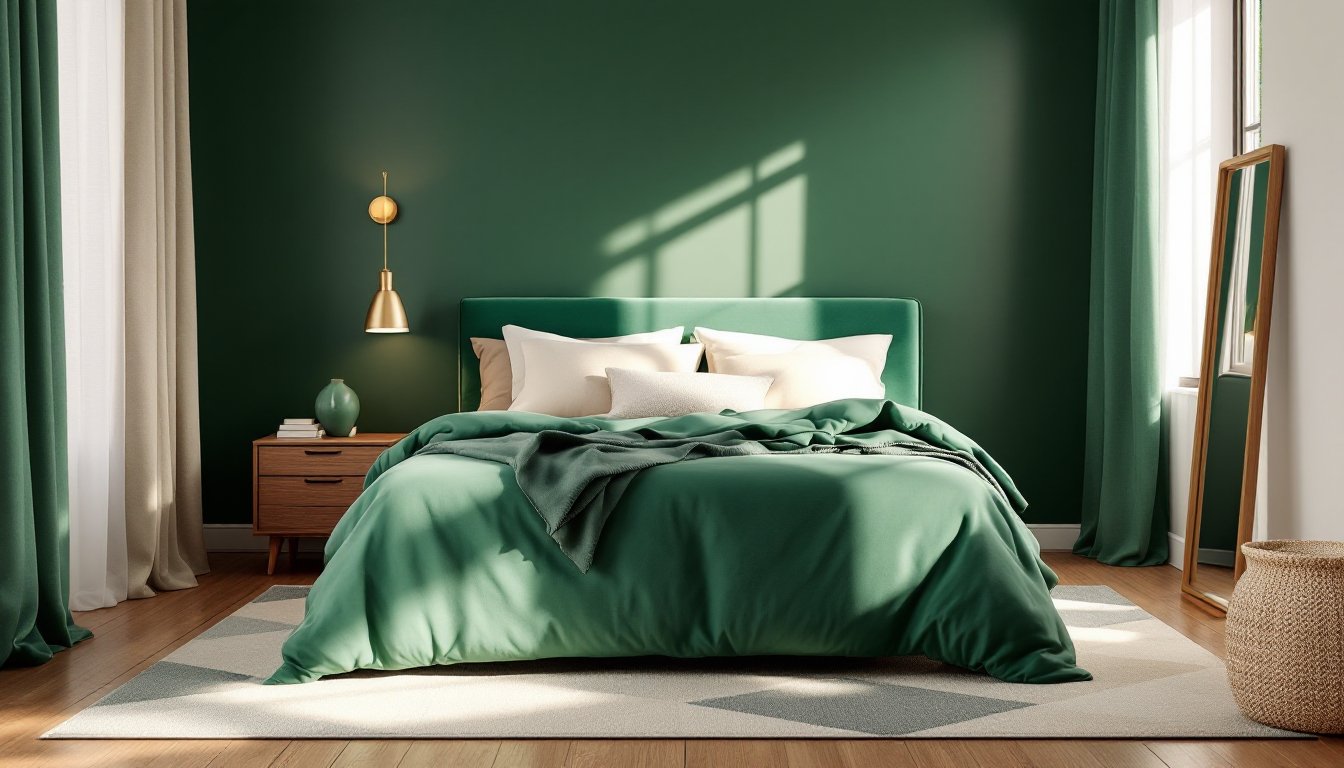
Textiles offer the easiest entry point for emerald green, they’re removable, layerable, and significantly cheaper than repainting. A duvet cover in solid emerald creates instant impact. Look for cotton sateen or linen blends rather than polyester: natural fibers show the color’s depth better and regulate temperature more effectively for sleep comfort.
Layer textures to prevent the color from feeling flat. Combine a smooth emerald duvet with textured throw pillows in velvet or boucle. Mixing emerald with neutral tones adds dimension, cream, taupe, or soft gray pillows prevent the bed from reading as a single color block.
Curtains in emerald control how much color dominates the room. Floor-to-ceiling panels in medium-weight linen provide privacy while filtering light beautifully during the day, emerald becomes luminous rather than dark when backlit. For full blackout capability (important for shift workers or light-sensitive sleepers), use emerald face fabric with blackout lining rather than solid blackout material, which often looks stiff.
Mount curtain rods at ceiling height rather than just above the window frame, this adds 6-12 inches of perceived height to the room. Use 1.5 to 2 times the window width in fabric for proper fullness: skimping on fabric makes expensive curtains look cheap.
An area rug with emerald as a primary or accent color grounds the space. If the walls are already emerald, choose a rug with emerald as a secondary color in a pattern to avoid overkill. Wool or wool-blend rugs wear better than synthetic in bedrooms, they’re naturally stain-resistant and don’t generate static.
For smaller textile touches, emerald throw blankets at the foot of the bed add color without commitment. Even a single emerald lumbar pillow on an otherwise neutral bed introduces the shade and tests whether it feels right in the space before larger investments.
Furniture and Decor Pieces in Emerald Green
An upholstered headboard in emerald velvet creates a luxe focal point and works across bed sizes from full to California king. Velvet’s pile catches light directionally, it looks darker when brushed one way, lighter from another angle, adding visual interest to a solid color. For DIY builds, cut 3/4-inch plywood to size, add 2-inch foam padding, wrap with batting, and staple velvet fabric on the back. Wall-mount with heavy-duty D-rings and appropriate anchors for the wall type (toggle bolts for drywall, lag screws into studs).
Emerald accent chairs work well in bedrooms large enough for a reading nook. Mid-century modern styles in emerald pair naturally with walnut or teak wood tones. Check that the chair’s scale fits the room, a barrel chair typically needs at least a 6’x6′ floor area to avoid feeling cramped. These pieces function as interior design focal points that add both color and utility.
Nightstands or dressers in emerald lacquer deliver high impact but require careful placement. Lacquered furniture shows fingerprints and dust readily, so position it where it won’t get constant contact. These pieces work best as intentional statement items rather than full bedroom sets, a pair of emerald nightstands flanking a neutral bed feels curated, while an entire emerald bedroom suite can overwhelm.
For smaller decor, emerald glass or ceramic table lamps add color at eye level when seated. Look for opacity in the material, translucent emerald glass looks washed out, while solid glazed ceramic maintains color saturation. Pair with warm-white bulbs (2700-3000K) rather than cool white to prevent the green from skewing blue-gray.
Mirrors with emerald frames bounce light and color simultaneously. Oversized leaning mirrors (typically 65-75 inches tall) work well propped against an empty wall, but secure the top with earthquake-resistant furniture straps, especially in homes with children or pets.
Pairing Emerald Green with Complementary Colors
Brass and gold metallics are emerald’s most natural partners, they share the warmth and luxury associations without competing. Brass curtain rods, gold-framed mirrors, and warm metallic light fixtures enhance emerald rather than clash with it. Polished brass shows fingerprints: brushed or satin finishes are more practical for frequently touched items like drawer pulls or lamp bases.
Blush pink and emerald create a sophisticated jewel-tone pairing. Use pink as an accent (throw pillows, artwork mats) rather than a 50-50 split to avoid the combination reading as overly feminine or dated. Dusty rose works better than bubblegum pink with emerald’s depth.
Navy blue grounds emerald in traditional or nautical-leaning schemes. This pairing works best when one color dominates, emerald walls with navy bedding, or navy walls with emerald accents. Equal amounts of both can feel heavy and dark, especially in rooms with limited natural light.
White and cream prevent emerald from feeling too saturated. Warm whites (those with yellow or beige undertones) work better than stark cool whites, which can make emerald look muddy by contrast. White trim, white bedding, or white furniture creates breathing room in emerald-heavy schemes.
Natural wood tones, especially walnut, teak, and lighter oak, balance emerald’s intensity with organic warmth. Medium to dark woods provide enough contrast to define furniture shapes against emerald walls without creating harsh lines. Avoid red-toned woods like cherry, which can clash with emerald’s blue undertones.
For a monochromatic approach, layer multiple green shades from sage to forest alongside emerald. This works when textures vary significantly, smooth emerald paint, nubby sage linen, glossy forest green ceramic. Without textural variation, monochromatic green risks looking flat or institutional.
Lighting Ideas to Enhance Your Emerald Green Bedroom
Emerald’s appearance shifts dramatically with lighting temperature and placement. Warm white bulbs (2700-3000K) bring out emerald’s richness and prevent it from looking muddy or gray. Cool white or daylight bulbs (4000K+) make emerald read more blue-green and less luxurious, fine for bathrooms or kitchens, wrong for bedrooms.
Layer lighting types rather than relying on a single overhead fixture. Table lamps on nightstands provide task lighting for reading and create pools of warm light that make emerald glow. Three-way bulbs (50-100-150 watt equivalent in LED) offer flexibility, high setting for tasks, low setting for ambiance. Position lamps so the bottom of the shade sits at 18-20 inches above the nightstand surface to avoid glare when lying in bed.
Wall sconces flanking the bed save nightstand space and add architectural interest. Swing-arm sconces offer adjustability for reading. Install them at 60-66 inches from the floor (roughly 36-40 inches above a standard mattress height) and wire them to a dimmer switch for control. This requires cutting into drywall and running electrical cable, if the existing room wiring doesn’t include a switched circuit at those locations, hiring a licensed electrician is the safe choice. Basic electrical work might seem DIY-friendly, but bedrooms often lack existing rough-in wiring for sconces, making this a professional job in most cases.
Pendant lights work as bedside lighting alternatives in rooms with adequate ceiling height (minimum 8.5 feet for pendants that hang 24-30 inches). They pair well with the current design trends for layered lighting in residential spaces. Choose pendants with fabric or frosted glass shades that diffuse light rather than exposed bulbs, which create harsh shadows on emerald walls.
For ambient lighting, LED strip lights behind the headboard or along crown molding create a soft glow that enhances emerald without the harshness of overhead fixtures. Use warm white LEDs and install them on dimmer-compatible drivers for control. Cheap LED strips often have visible individual diode points: commercial-grade strips with diffuser channels provide even light distribution.
Natural light management matters. Emerald looks best with abundant natural light during the day but can feel cave-like in dim conditions. Install mirrors opposite windows to bounce light deeper into the room. If privacy allows, keep window treatments open during daylight hours, emerald’s depth benefits from the full spectrum of natural light.
Conclusion
Emerald green brings lasting sophistication to bedrooms without the trendiness that dates a space within a few years. It adapts to different design styles, lighting conditions, and room sizes when applied thoughtfully. Starting with removable elements like textiles and decor allows for experimentation before committing to paint or furniture. The key is balancing emerald’s intensity with complementary colors, varied textures, and appropriate lighting that shows the color at its best throughout the day.