Table of Contents
ToggleElectric fireplace inserts have become one of the fastest-growing upgrades in home renovation, and it’s easy to see why. They deliver the warmth and ambiance of a traditional fireplace without the hassle of venting, gas lines, or chimney maintenance. Whether someone’s working with an outdated wood-burning firebox or just wants to add a focal point to a blank wall, an electric insert offers flexibility that other options can’t match. Installation is typically DIY-friendly, costs are predictable, and the design possibilities range from rustic to ultra-modern.
Key Takeaways
- Electric fireplace inserts eliminate the need for venting, chimney maintenance, or gas lines while delivering authentic flame effects and adjustable heat output of 4,000 to 5,100 BTUs suitable for rooms up to 500 square feet.
- Converting existing wood-burning or defunct fireplaces with inserts requires simple measurements and basic preparation—cleaning the firebox and optionally sealing the damper—making it an ideal DIY-friendly renovation project.
- Modern electric fireplace insert designs integrate seamlessly into wall builds and media consoles with frameless glass fronts and multi-color LED flame options, offering year-round ambiance and customizable aesthetics.
- Bedroom installations of electric inserts create cozy atmospheres without safety risks, and can operate flame effects independently of heat while incorporating timers and adjustable brightness for wind-down functionality.
- Custom surrounds with built-in shelving, stone veneer, or industrial frames allow personalization while maintaining proper ventilation with at least 3 inches of clearance around the unit.
- Standard sizing ranges from 23 to 33 inches wide, with shallow 6-inch models available for tight spaces, and most units operate on standard 120V circuits without requiring major electrical upgrades.
What Is an Electric Fireplace Insert and Why Choose One?
An electric fireplace insert is a self-contained unit that fits into an existing firebox or a custom-built opening. It uses LED flame effects and either infrared or fan-forced heating elements to mimic the look and warmth of a real fire. Most models plug into a standard 120V outlet, though larger units with higher heat output may require a dedicated circuit.
Unlike gas or wood-burning fireplaces, electric inserts don’t produce emissions, so they require no venting, chimney, or gas line installation. That makes them ideal for condos, apartments, or homes where adding a traditional fireplace isn’t feasible. Heat output typically ranges from 4,000 to 5,000 BTUs, enough to warm a room of about 400 to 500 square feet. Many units offer adjustable flame settings that can run independently of the heat, so they work year-round for ambiance alone.
The main advantages are low cost, easy installation, and minimal upkeep. There’s no ash to clean, no annual chimney inspections, and no risk of carbon monoxide. For homeowners looking to upgrade without major construction, electric inserts deliver the biggest visual impact with the least disruption.
Traditional Fireplace Makeovers with Electric Inserts
Converting an old wood-burning or non-functional gas fireplace is one of the most common uses for electric inserts. The process is straightforward: clean out the firebox, measure the opening, and drop in an insert that fits snugly.
Start by measuring the width, height, and depth of the existing firebox. Most inserts come in standard sizes, 23 inches, 26 inches, 28 inches, and 33 inches wide are the most common. If the firebox is deeper than the insert, use black stove pipe or sheet metal to fill the gap behind the unit and create a finished look.
Before installation, inspect the firebox for loose bricks, crumbling mortar, or soot buildup. While the insert doesn’t require a functional chimney, the surround should be structurally sound. If the damper is still operable, consider sealing it with a magnetic damper cover to prevent drafts and improve energy efficiency.
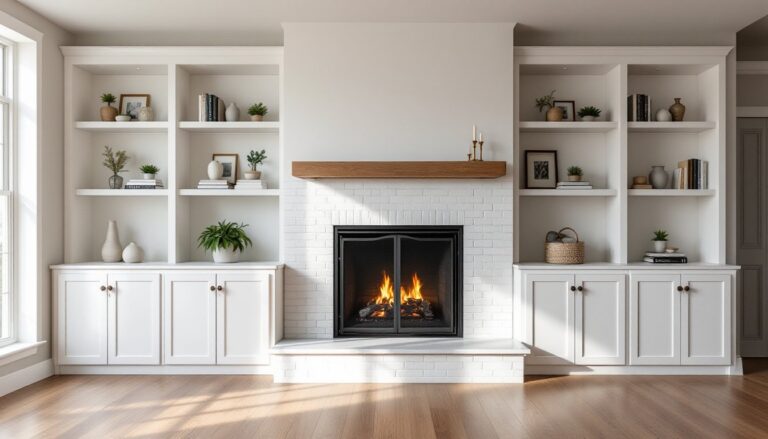
Once the insert is in place, the surround can be refreshed with new materials. Painted brick, stacked stone veneer, or a tile surround can completely change the aesthetic. For a classic look, many homeowners frame the insert with a traditional wood mantel in oak, maple, or reclaimed barn wood. Just ensure the mantel is installed at least 12 inches above the top of the insert to meet manufacturer clearance requirements.
Modern Living Room Electric Fireplace Insert Designs
In contemporary spaces, electric inserts are often integrated into linear wall builds or media consoles rather than traditional fireboxes. These designs emphasize clean lines, minimal trim, and flush mounting.
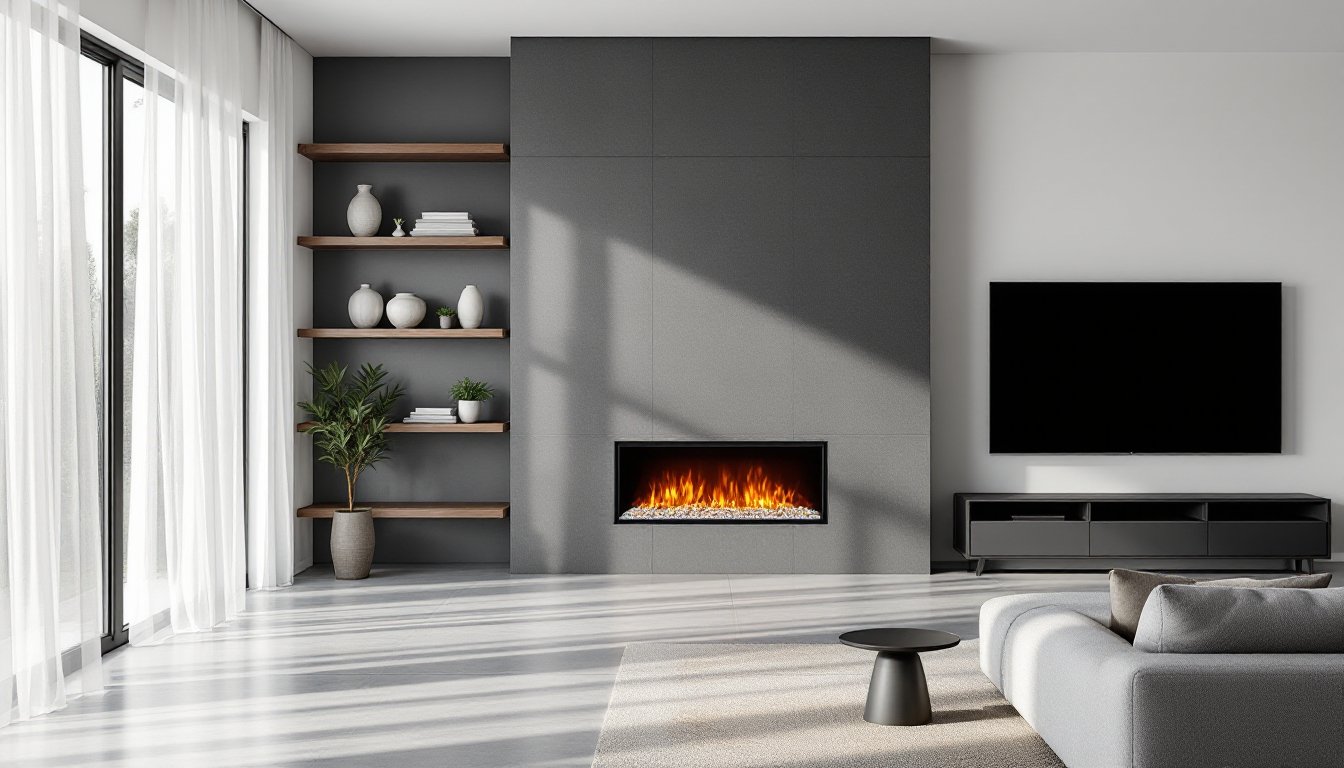
A popular approach is building a full-wall feature using drywall over a steel stud frame. The insert is recessed into the wall, and the surround is finished with large-format porcelain tile, polished concrete panels, or blackened steel. This style works especially well in open-concept living rooms where the fireplace serves as a room divider or anchor point.
For a seamless look, choose an insert with a frameless glass front and multi-color LED flames. Some models allow users to switch between orange, blue, or violet flames via remote, which adds versatility for different moods or seasons.
Another modern option is pairing the insert with a floating media console. Build a simple cabinet using 3/4-inch plywood or MDF, finish it with veneer or laminate, and mount it directly below the insert. Leave space behind for cable management and ventilation, most inserts need at least 3 inches of clearance on the sides and top when recessed.
According to design trends highlighted by Better Homes & Gardens, mixing materials like wood and metal in these installations creates visual interest without overwhelming the space.
Bedroom Electric Fireplace Insert Ideas for Cozy Ambiance
Adding an electric insert to a bedroom is a simple way to create a retreat-like atmosphere without the safety concerns of an open flame. Since most units can operate the flame effect without heat, they’re practical even in smaller bedrooms where additional warmth isn’t needed.
A common setup is installing an insert into a faux chimney breast built from 2×4 studs and drywall. This creates the illusion of a traditional fireplace without taking up much floor space. Frame the opening to match the insert’s dimensions, leaving 1/2 inch to 1 inch of clearance on all sides for trim. Finish the surround with shiplap, wainscoting, or decorative molding for texture.
For a more minimal look, mount the insert directly into the wall at eye level when lying in bed, typically around 24 to 30 inches off the floor. Surround it with a simple picture frame mantel or leave it frameless for a gallery-style effect.
Safety tip: Always plug the insert into a GFCI-protected outlet if it’s near a bathroom or any area where moisture might be present. And never run an extension cord, use a properly rated outlet within 6 feet of the unit.
Some inserts include a timer function and adjustable brightness, which makes them ideal for use as a nightlight or wind-down feature before sleep.
Creative Built-In and Custom Surround Concepts
Custom surrounds let homeowners tailor the fireplace to their style and available space. These projects range from simple trim work to full carpentry builds.
One option is creating a floor-to-ceiling surround with built-in shelving on either side. Use 2×4 framing to build the vertical structure, then add fixed or adjustable shelves using 3/4-inch plywood or solid wood boards. The insert sits in the center, and the shelves can display books, plants, or decor. Finish the entire assembly with paint-grade MDF for a clean, cohesive look, or use stained hardwood for warmth.
Another creative idea is installing the insert into a stone or brick accent wall. This works well in basements, dens, or rustic-style homes. When working with home renovation cost guides, stone veneer typically ranges from $8 to $25 per square foot installed, depending on the material and region. Cultured stone is lighter and easier to work with than natural stone, and it doesn’t require a reinforced wall in most cases.
For a more industrial aesthetic, frame the insert with raw steel angle iron or flat bar stock. Weld or bolt the frame together, then mount it around the insert opening. This pairs well with exposed brick, concrete floors, or loft-style interiors.
Don’t forget ventilation. Even though electric inserts don’t produce combustion gases, they do generate heat from internal components. Leave at least 3 inches of open space around the unit when building a custom enclosure, and avoid blocking any vents on the front grille.
Choosing the Right Size and Style for Your Space
Selecting the right insert starts with accurate measurements and a clear understanding of the room’s layout and design goals.
Measure the width of the space where the insert will go. For existing fireboxes, measure the interior width at the narrowest point, usually the damper shelf or firebox opening. For new builds, decide on the desired visual scale. A 26-inch insert works well in smaller rooms or bedrooms, while a 33-inch or larger linear insert suits spacious living areas or open-concept layouts.
Consider the depth of the installation. Standard inserts are typically 10 to 14 inches deep, but shallow models (around 6 inches) are available for wall-mount applications or tight spaces. If building a custom surround, plan for the insert to sit flush or slightly recessed, and account for trim material thickness.
Style-wise, traditional inserts feature realistic log sets, ember beds, and brick or refractory panel interiors that mimic a wood fire. Modern units often use glass media (clear crystals or colored stones), driftwood-style logs, or linear flame strips for a sleeker look.
BTU output matters if supplemental heat is a priority. A 1,500-watt insert produces around 5,100 BTUs, suitable for rooms up to 500 square feet. In larger or poorly insulated spaces, the insert works best as an accent heat source rather than a primary one.
Finally, check the electrical requirements. Most inserts run on standard 120V, 15-amp circuits, but always verify the manufacturer’s specs. If the circuit also powers other devices, consider having an electrician install a dedicated 20-amp line to prevent tripped breakers.
Practical advice from resources like The Spruce often emphasizes choosing flame realism and remote functionality over purely decorative features, especially for year-round use.
Conclusion
Electric fireplace inserts offer a practical, versatile solution for adding warmth and visual interest to nearly any room. From traditional makeovers to modern built-ins, the range of design options makes it easy to match personal style and functional needs. With straightforward installation, minimal maintenance, and no venting required, they’re one of the most accessible upgrades a homeowner can tackle, whether retrofitting an old firebox or building a custom feature wall from scratch.