Table of Contents
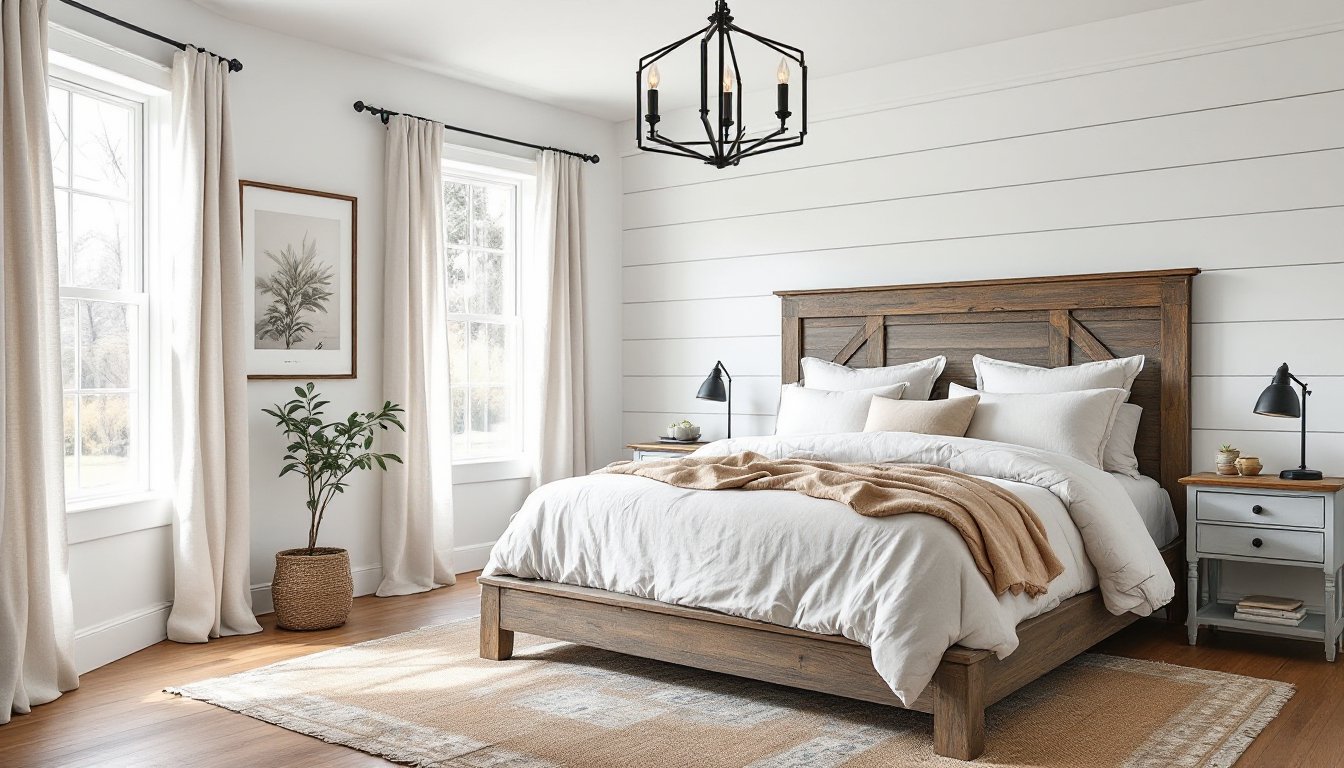
ToggleA farmhouse master bedroom blends timeworn character with modern comfort, think reclaimed wood headboards, soft linen bedding, and plenty of lived-in warmth. It’s a style that welcomes you home without trying too hard. Unlike sterile minimalism or overly fussy traditional décor, farmhouse design strikes a balance: functional pieces with patina, neutral palettes punctuated by texture, and architectural details that nod to agrarian roots. This guide walks through the core elements, color, furniture, textiles, lighting, and wall treatments, that turn a standard bedroom into a space with soul and staying power.
Key Takeaways
- Farmhouse master bedroom ideas emphasize authentic materials like reclaimed wood, natural textiles, and solid wood furniture that develop character with age rather than following trendy designs.
- Neutral color palettes featuring whites, warm grays, and muted earth tones (such as Benjamin Moore’s Swiss Coffee or Sherwin-Williams’ Agreeable Gray) create a serene foundation while allowing textured layers to stand out.
- Bedding and textiles should prioritize natural fibers with practical layering—start with linen or cotton duvet covers, add quilted coverlets with geometric patterns, and use cotton sheets with 200–400 thread count for that crisp farmhouse feel.
- Wall treatments like shiplap, board-and-batten, or reclaimed wood accents are signature farmhouse elements that require proper installation into wall studs for durability and security.
- Mix mismatched vintage pieces and modern necessities rather than buying matching bedroom sets, as authentic farmhouses accumulated furniture over decades with visible joinery and honest wear.
- Layered lighting with industrial-utility fixtures—such as wrought iron chandeliers, metal task lamps, and wall sconces mounted 60–66 inches from the floor—enhances rustic ambiance while maintaining functionality.
What Defines a Farmhouse Master Bedroom?
Farmhouse style centers on simplicity, durability, and a touch of nostalgia. The aesthetic borrows from 19th-century American farmhouses, spaces built for utility first, beauty second, yet somehow achieving both.
Key hallmarks include reclaimed or distressed wood, neutral and earthy color schemes, natural textiles like cotton and linen, and minimal ornamentation. Unlike cottage or shabby chic styles, farmhouse avoids excess ruffles or pastels. It’s grounded in materials that age well: wide-plank flooring, shiplap or board-and-batten walls, wrought iron hardware, and furniture with visible joinery.
Authenticity matters. A farmhouse bedroom shouldn’t feel staged. Mix vintage finds, an antique dresser, a galvanized metal bin, with modern necessities. The goal is comfort and function, not a museum. If a piece has a story or shows honest wear, it belongs.
Scale also plays a role. Farmhouses were modest structures, so oversized furniture or ornate crown molding can clash. Stick to pieces proportional to the room, with clean lines and sturdy construction. Think solid oak bed frames, open shelving, and simple casement windows dressed with unlined curtains or natural wood blinds.
Color Palettes That Create Farmhouse Serenity
Farmhouse bedrooms lean on whites, creams, warm grays, and muted earth tones. These hues reflect natural light and provide a backdrop for layered textures without visual clutter.
White is the workhorse: Benjamin Moore’s Swiss Coffee (OC-45) or Sherwin-Williams’ Alabaster (SW 7008) are perennial favorites. Both have subtle warm undertones that prevent the stark, clinical feel of pure white. Expect coverage of about 350–400 square feet per gallon for quality paints with primer.
Warm grays and greiges add depth without weight. Try Sherwin-Williams’ Agreeable Gray (SW 7029) or Benjamin Moore’s Revere Pewter (HC-172). Pair these with off-white trim (not bright white) to maintain cohesion.
Accent colors should be restrained: soft sage, dusty blue, or terracotta work when used sparingly, an upholstered headboard, a throw pillow, or a single accent wall. Avoid trendy hues that date quickly. Farmhouse design thrives on longevity.
Sample paints on a 2×2-foot poster board and observe them at different times of day. Natural light shifts undertones dramatically, and what looks perfect at noon may read too cool at dusk.
Furniture Choices for Authentic Farmhouse Style
Farmhouse furniture prioritizes solid wood construction over veneers or particleboard. Look for oak, pine, or reclaimed barn wood, species that develop character as they age.
Bed frames should anchor the room. A king-size platform bed (76 × 80 inches) in weathered oak or a simple iron frame with a wooden headboard both work. If building a DIY headboard, use 1×6 or 1×8 pine boards (actual dimensions 3/4″ × 5.5″ and 3/4″ × 7.25″) arranged vertically and stained or whitewashed. Attach them to a 2×4 frame secured to wall studs, not just drywall anchors, to prevent sagging.
Dressers and nightstands should have visible joinery: dovetails, mortise-and-tenon, or simple butt joints with exposed screws (not hidden). Distressed finishes, sanding edges, applying a gray wash, or wire-brushing grain, add age without faking damage.
Skip matching bedroom sets. Farmhouses accumulated furniture over decades, so a mix of finishes and periods reads more authentic. Pair a dark walnut dresser with a lighter pine nightstand.
Seating can include a simple upholstered bench at the foot of the bed or a vintage ladder-back chair. For those tackling kitchen renovation ideas, the same principles apply: prioritize materials that tell a story and build in layers.
Textiles and Bedding That Bring Cozy Comfort
Textiles soften the hard edges of wood and metal. Choose natural fibers: linen, cotton, wool, and jute.
Bedding should layer for warmth and visual interest. Start with a linen or cotton duvet cover in white or oatmeal. Add a quilted coverlet or matelassé blanket for texture. Farmhouse quilts often feature geometric patterns, log cabin, nine-patch, or simple stripes, not floral chintz.
Sheets should be 100% cotton with a thread count between 200–400. Higher counts can feel slick: farmhouse leans toward the crisp, breathable feel of percale weave.
Throw pillows should be functional, not decorative clutter. Two or three linen euro shams (26 × 26 inches) and a lumbar pillow in ticking stripe or grain sack fabric are plenty. Avoid sequins, fringe, or anything that requires dry cleaning.
Window treatments can be simple linen or cotton drapes hung from wrought iron or wood rods. Unlined panels filter light naturally. If privacy is a concern, add cellular shades or wooden blinds beneath.
Rugs ground the space. A jute or sisal area rug (8 × 10 feet for a king bed) adds texture underfoot. Layer a smaller vintage wool rug on top for warmth.
Lighting Fixtures That Enhance Rustic Ambiance
Farmhouse lighting blends industrial utility with handcrafted warmth. Avoid ornate crystal or polished chrome.
Overhead fixtures should make a statement without overwhelming the room. A wrought iron chandelier with candelabra bulbs (E12 base, 40-watt equivalent LED) works well. Alternatively, a wood-beam pendant or a simple flush-mount drum shade with linen fabric keeps things understated.
If installing new fixtures, turn off power at the breaker, not just the wall switch. Use a non-contact voltage tester to confirm the circuit is dead before touching wires. Most bedroom fixtures are on 15-amp circuits (14-gauge wire), but verify with your panel.
Bedside lighting can include metal task lamps with exposed bulbs or wooden table lamps with burlap or linen shades. Match the color temperature to the room: 2700K–3000K warm white mimics incandescent bulbs and complements the palette.
Wall sconces are a practical addition if nightstands are small. Mount them 60–66 inches from the floor, centered above each side of the bed. Use a stud finder and toggle bolts for drywall, or screw directly into studs when possible.
Dimmer switches (compatible with LED bulbs) let residents adjust ambiance. Install a single-pole dimmer rated for the fixture’s total wattage. According to standards inspired by design trends on Home Bunch, layered lighting elevates both function and mood.
Wall Treatments and Architectural Details
Walls set the tone for farmhouse style. Shiplap, board-and-batten, and reclaimed wood accents are signature treatments.
Shiplap refers to 1×6 or 1×8 pine boards with a rabbet (rebate) joint that overlaps slightly. Install horizontally, starting at the floor and working up. Nail into studs (16 or 24 inches on center) with 18-gauge brad nails or finish nails. Leave a 1/8-inch gap between boards for seasonal expansion, wood moves with humidity.
If using MDF or primed pine, seal all edges with primer before installation to prevent moisture absorption. Paint or stain after installation, filling nail holes with wood filler first.
Board-and-batten adds vertical interest. Install 1×2 or 1×3 battens over a painted drywall base, spaced 12–16 inches apart. Secure with finish nails into studs and adhesive on drywall sections. This treatment works well as a wainscot (covering the lower third of the wall) or full-height on an accent wall.
Reclaimed wood brings instant age but requires prep. Inspect for nails, dirt, or insect damage. Sand lightly with 120-grit sandpaper to remove splinters, but preserve patina. Seal with a clear matte polyurethane or penetrating oil to prevent shedding.
Accent walls should be intentional. Choose the wall behind the bed or the wall facing the door. Installing a farmhouse sink shares similar principles: careful measurement, secure fastening, and respect for material weight.
For paint-only treatments, consider a limewash or chalky finish paint (brands like Romabio or Fusion Mineral). These create a matte, slightly textured surface that mimics aged plaster.
Architectural details like crown molding or baseboards should be simple: 3–5-inch flat-stock baseboards and minimal crown, if any. Farmhouses didn’t have elaborate millwork. If the room has existing ornate trim, consider replacing it with plain-profile MDF or pine for consistency.
Safety note: When cutting trim or boards, wear safety goggles and hearing protection. A miter saw gives cleaner angle cuts than a circular saw, but both work. Secure workpieces with clamps, never freehand cuts.
Conclusion
A farmhouse master bedroom isn’t about chasing trends or filling Pinterest boards, it’s about building a space that feels grounded, lived-in, and built to last. Stick to quality materials, honest finishes, and pieces that earn their place through function or story. Whether installing shiplap, refinishing a vintage dresser, or choosing the right linen duvet, every decision should prioritize durability and comfort over flash. The result is a room that improves with age, much like the farmhouses that inspired it.