Table of Contents
ToggleA bare mantel is a missed opportunity. The fireplace acts as the visual anchor of most living rooms, and a well-styled garland instantly elevates the space from functional to finished. Whether aiming for traditional holiday charm, everyday elegance, or a modern minimalist look, the right garland creates depth, texture, and seasonal interest. The key is choosing materials that suit the style of the home, securing them properly to avoid fire hazards, and balancing scale with the mantel’s proportions. This guide covers classic greenery, seasonal themes, DIY rustic options, contemporary designs, and installation methods that keep garlands safely in place.
Key Takeaways
- Fireplace garland ideas range from classic evergreen and seasonal themes to modern minimalist designs, each transforming a bare mantel into a finished, visually anchored focal point of the room.
- Choose garland proportions based on mantel width—a 9- to 12-foot garland works best for standard 60–72 inch mantels—and layer different textures like fir, eucalyptus, and magnolia for depth and natural appeal.
- Secure garlands safely using finish nails, cup hooks, brick clips, or removable adhesive strips, and maintain at least 12–18 inches of clearance from active fireplaces to prevent fire hazards.
- DIY garland projects using jute rope bases, foraged botanicals, dried citrus, and wire assembly provide budget-friendly customization, while fresh floral arrangements require water tubes and regular hydration for spring and summer displays.
- Modern fireplace garlands emphasize restraint and intentional design—monochromatic palettes, asymmetrical drapes, and geometric elements create sophisticated looks without visual clutter.
- Keep fresh greenery misted, check garland security weekly, and avoid small detachable ornaments near fireplaces with pets or toddlers to maintain both aesthetic appeal and household safety.
Classic Greenery Garland for Timeless Elegance
Fresh or high-quality faux evergreen garland remains the most versatile choice for fireplace mantels. Cedar, pine, fir, and eucalyptus work year-round and suit both traditional and transitional interiors. Fresh garland typically lasts 2–3 weeks indoors before needles begin to drop: faux versions offer longevity and consistent appearance without watering.
When selecting greenery, proportion matters. For a standard mantel (60–72 inches wide), a 9- to 12-foot garland drapes naturally with enough material to create fullness without overwhelming the space. Thinner mantels (under 6 inches deep) pair better with lighter garlands: deeper mantels can support denser, heavier options.
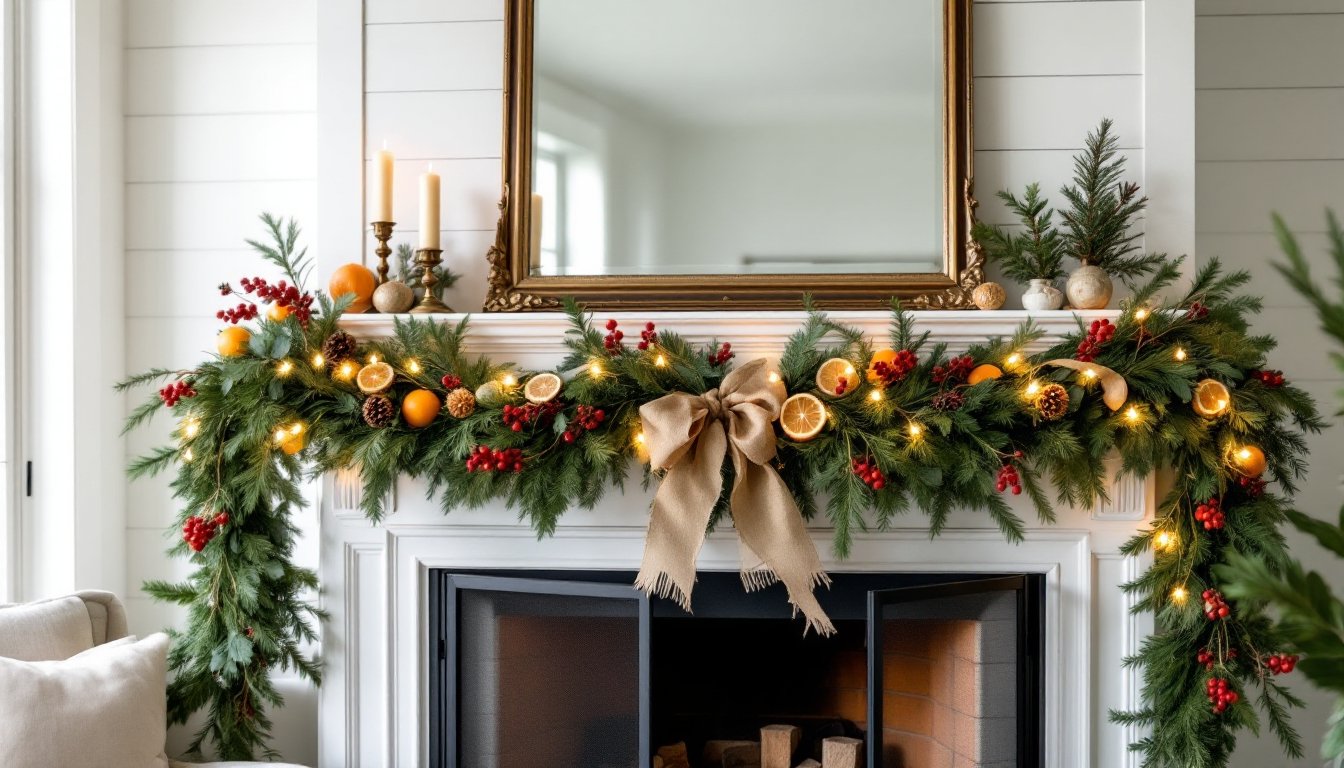
Layer different textures for depth. Combine noble fir branches with softer white pine, then add silver-dollar eucalyptus or seeded eucalyptus for contrast. Wiring in magnolia leaves creates a Southern touch, while adding pinecones, dried citrus slices, or seed pods introduces organic variation.
For a lived-in look, tuck in sprigs at varying angles rather than arranging them uniformly. Avoid spacing embellishments evenly, cluster items in groups of three or five for a more natural composition. If using fresh greenery near an active fireplace, mist it daily and keep it at least 12 inches from the firebox opening to reduce fire risk.
Seasonal and Holiday-Themed Garland Designs
Christmas and Winter Wonderland Styles
Christmas garlands dominate the fireplace decor conversation, but execution varies widely. Traditional designs lean on red velvet ribbon, gold ornaments, and white berries, while farmhouse styles favor burlap, galvanized bells, and wood bead strands. Vintage-inspired looks incorporate mercury glass ornaments, tinsel, and retro bulb shapes.
For a cohesive holiday garland design, select a color palette first, two to three colors prevent visual chaos. Wire ornaments directly into the garland base rather than hanging them from hooks: this keeps them secure and prevents gaps. Battery-operated LED string lights (warm white, 3000K) woven through the garland add warmth without the hazard of extension cords crossing walkways.
Winter wonderland themes skip the red and green in favor of icy whites, silvers, and pale blues. Flocked garland mimics snow-covered branches, and adding white feathers, glass icicles, or frosted pinecones reinforces the look. Avoid mixing warm metallics (gold, copper) with cool-toned winter palettes, they clash.
Spring and Summer Floral Arrangements
Garlands aren’t just for cold months. Spring mantels benefit from fresh floral arrangements woven into grapevine or willow bases. Tulips, peonies, ranunculus, and garden roses create cottage charm, while greenery-only garlands with lamb’s ear, ivy, and ferns suit minimalist tastes.
Fresh flowers require water tubes (floral picks) inserted into the garland: change water every 2–3 days. For a lower-maintenance option, use silk flowers, modern faux botanicals are nearly indistinguishable from real blooms at arm’s length.
Summer garlands incorporate brighter tones and textural elements. Lemon branches (real or faux), sunflowers, and lavender bundles bring outdoor vibrancy inside. Seagrass, driftwood pieces, and nautical rope work well in coastal homes. Avoid heavy, dark materials in warm months, they visually weigh down a space.
DIY Garland Ideas Using Natural and Rustic Elements
Building a garland from scratch allows full control over materials, cost, and customization. Start with a base: jute rope (1/2-inch diameter), grapevine garland, or pre-wired floral garland (available at craft stores in 6- to 9-foot lengths). Jute rope is the most budget-friendly and provides a sturdy anchor for heavier elements.
Gather foraged or purchased natural items: eucalyptus stems, olive branches, dried grasses, wheat stalks, cotton stems, or pussy willow. For rustic textures, add burlap ribbon, cinnamon sticks tied in bundles, or small birch rounds drilled with pilot holes for wire threading.
Assemble the garland in 12-inch sections. Use 24-gauge floral wire to attach stems and elements: wrap wire tightly around the base, then twist ends to secure. Overlap each section slightly to conceal wire and create a continuous flow. Hot glue works for lightweight additions (dried flowers, small pinecones), but wire holds up better over time and allows for adjustments.
For a farmhouse-style garland, combine cotton stems, eucalyptus, and white-washed wood beads strung on jute twine. A boho version might feature pampas grass, macramé tassels, and leather cord accents. Dried orange slices (baked at 200°F for 3–4 hours) add color and a subtle scent when wired into the design.
Safety note: Keep all garlands, especially those with dried materials, at least 18 inches away from active fireplaces. Dried botanicals are highly flammable.
Modern and Minimalist Garland Approaches
Not every fireplace needs a lush, overflowing garland. Modern interiors benefit from restrained designs that emphasize shape and negative space over abundance. A single strand of preserved eucalyptus or olive branch draped asymmetrically across one side of the mantel creates visual interest without clutter.
Monochromatic palettes work well in contemporary spaces. An all-white garland (bleached ruscus, white roses, ivory ribbon) stands out against dark fireplaces or bold wall colors. Conversely, an all-black garland (matte black faux branches, charcoal-dyed pampas, black taper candles) makes a dramatic statement in minimalist settings.
Geometric elements replace traditional florals in modern designs. Brass hoops, concrete orbs, or walnut wood dowels cut to varying lengths and suspended from home decor ideas offer sculptural interest. Wire these elements onto a thin cable or fishing line for an invisible support structure.
Lighting in modern garlands should be subtle. Skip multicolored bulbs and opt for micro LED strips tucked behind the garland to cast a soft glow on the wall. Edison-style string lights with exposed bulbs work if the overall aesthetic leans industrial.
Minimalist doesn’t mean boring, it means intentional. Each element should serve a purpose, whether adding texture, defining the mantel’s length, or drawing the eye upward to highlight architectural details like a large mirror or artwork.
How to Secure and Display Your Garland Safely
Improper installation leads to sagging garlands, damaged mantels, and fire hazards. The attachment method depends on mantel material and garland weight.
For wood mantels, use small finish nails or cup hooks placed on the underside of the mantel lip, spaced 18–24 inches apart. Drape the garland over the front edge and secure it with floral wire tied to the hooks. This method hides hardware and allows easy removal. Alternatively, adhesive hooks rated for the garland’s weight work on painted or finished wood: remove them carefully to avoid pulling off paint.
Brick or stone mantels require different tactics. Brick clips (metal brackets that slide between bricks) hold garlands without drilling. For smooth stone, use removable adhesive strips rated for at least 5 pounds. Test a small area first to ensure the adhesive won’t damage the finish.
For heavy garlands (fresh greenery with ornaments or substantial DIY creations), consider a garland hanger, a metal bracket that hooks over the mantel’s back edge and holds weight without visible fasteners. These work best on mantels with accessible back edges.
Fire safety is non-negotiable. Garlands must never block the fireplace opening or hang into the firebox. Maintain a minimum 12-inch clearance from any heat source. If using an active fireplace, remove garlands before lighting fires or switch to a mantel shelf mounted higher and farther from the firebox. Battery-operated lights eliminate the shock and fire risk of frayed cords near heat.
Check garland security weekly, especially fresh greenery that dries and becomes lighter (and more brittle). Re-tighten wires and replace adhesive hooks as needed. For homes with curious pets or toddlers, avoid glass ornaments or small detachable elements that pose choking hazards.